Call Auto-answer Configuration
Auto-answer feature allows the device to automatically pick up incoming calls without any manual intervention. You can also customize this feature by setting the time duration for auto-answering and choosing the communication mode between audio and video.
To enable the auto-answer feature, go to the web Account > Advanced > Call interface.
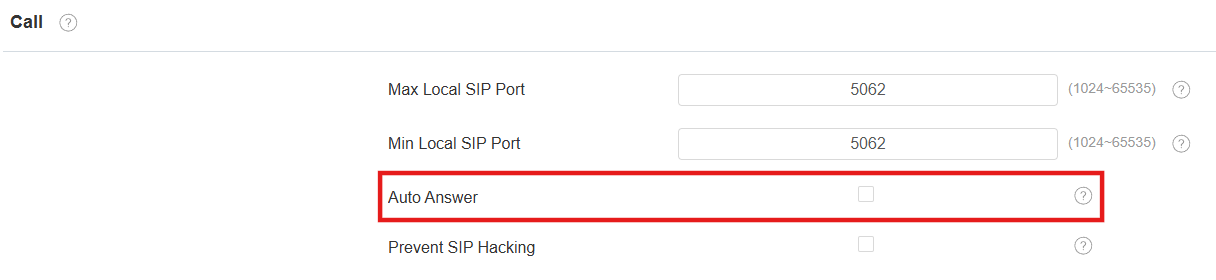
To set it up, go to the web Device > Call Feature > Others interface.
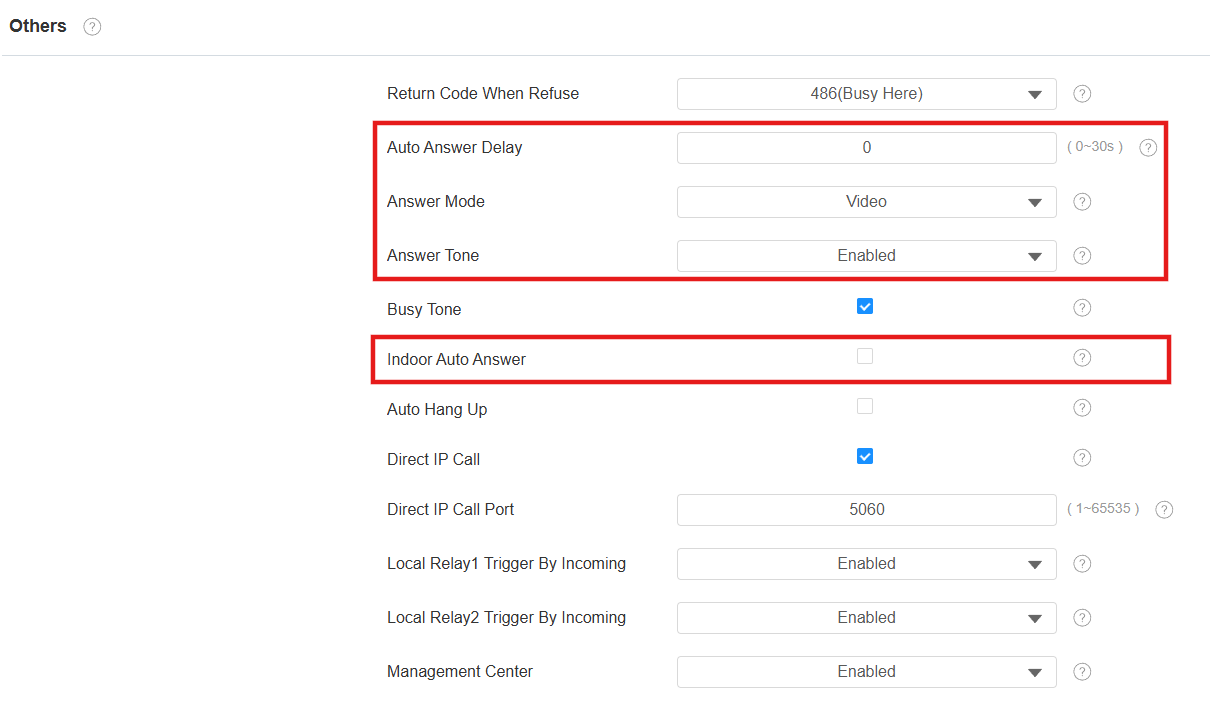
Auto Answer Delay: Set the time interval for the call to be automatically picked up after ringing. For example, if you set the delay time to 5 seconds, the device will answer the call automatically after 5 seconds.
Answer Mode: Determine whether to auto-answer the call as a video or audio call.
Answer Tone: Select the tone for answering calls automatically.
Indoor Auto Answer: Allow calls from other indoor monitors to be answered by the device automatically.
Other Options:
Return Code When Refuse: Decide the code sent to the caller side via the SIP server when rejecting the incoming call.
Busy Tone: Decide whether to sound a busy tone when a call is hung up by the callee.
Auto Hang Up: Set whether to hang up the incoming calls automatically.
Local Relay1/2 Trigger By Incoming: Set whether to trigger the local relay by incoming calls.
Management Center: Decide whether to generate the contact labeled Management Center.
When the device is deployed on the SmartPlus Cloud, the cloud system will issue the SmartPlus Property Manager App and the guard phone R49 as a contact labeled Management Center. When this function is disabled, the PM App and guard phone will be displayed as contacts separately.
When the device is deployed on the SDMC, SDMC is shown as Management Center on the device screen. When the function is disabled, no contacts will be displayed as the Management Center.
Auto-answer Allow List setting
Auto-answer can only be applicable to the SIP or IP numbers that are already added in the auto-answer allow list of your indoor monitor. Therefore, you are required to configure or edit the numbers in the allow list on the web interface.
To set it up, go to the Security > Allowlist interface. Click +Add to add the allowed device.
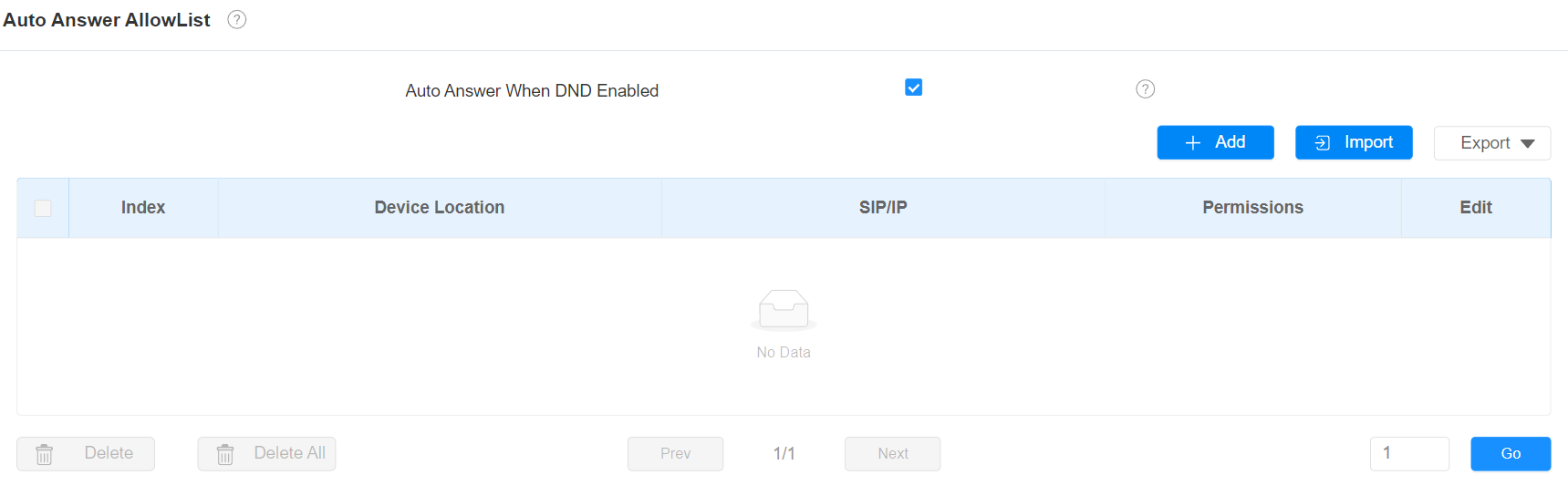
Auto Answer When DND Enabled: Indicate that the auto-answer feature is effective when DND is turned on.
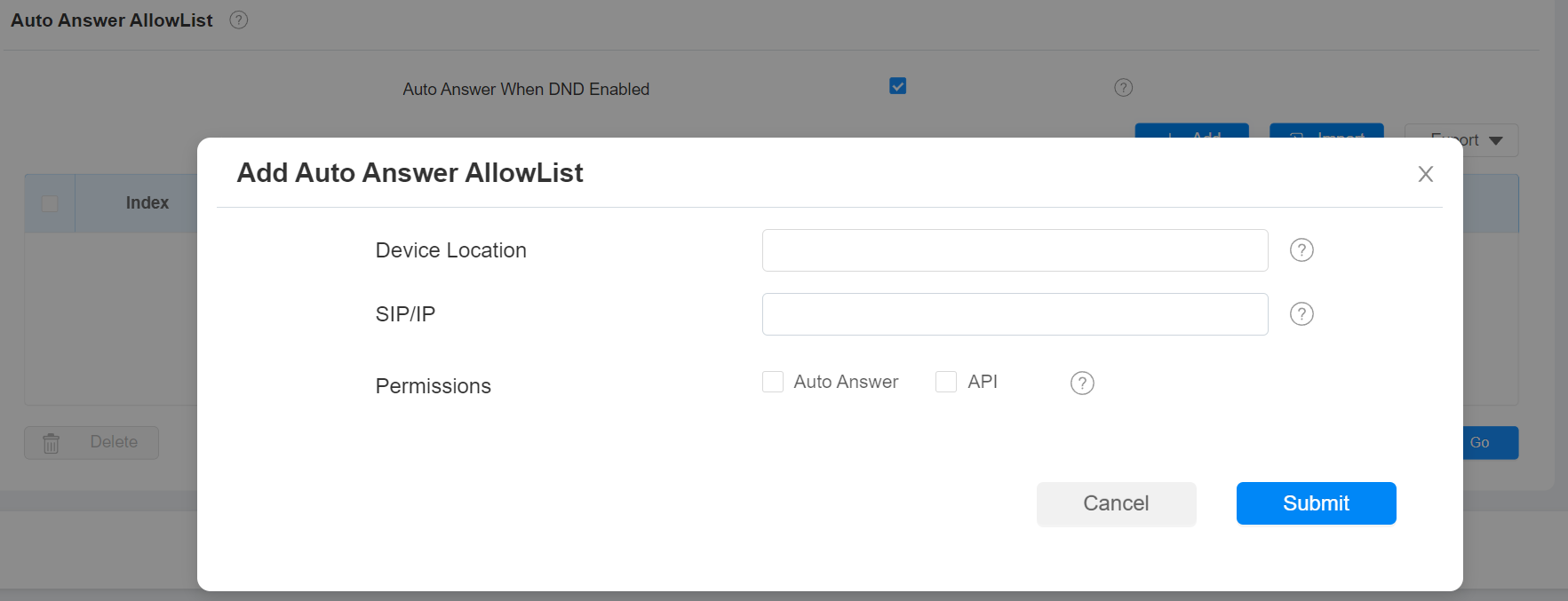
Device Location: Specify the allowed device’s name or location.
SIP/IP: Enter the allowed device’s SIP or IP number.
Permissions:
Auto Answer: The call from the device will be answered automatically.
API: The device is allowed to access API.
Note
SIP/IP number files to be imported or exported must be in either .xml or .csv format.
SIP/IP numbers must be set up in the contact list of the indoor monitor before they can be valid for the auto-answer function.
Live Stream Setting
The Receive Live Stream function enables the indoor monitor to view the one-way video stream from the calling party, regardless of whether the call is audio or video. Meanwhile, the video feed from the indoor monitor is not transmitted to the calling device, protecting the privacy.
To set it up, go to the web Device > Call Feature > Audio Call Setting interface.

When it is enabled, calling parties cannot see users when they want to have a two-way video call with users. See the details below:
If an incoming call is received on an audio basis on the device, the user can still see the video image of the calling party, while the calling party cannot see the user’s. Thus, it protects the user’s privacy.
If an incoming call is received on a video basis on the device, the user and the calling party can see each other in the two-way video call.
Intercom Active, Mute, and Preview
To see the image at the door station before answering the incoming call, you can enable the intercom preview function on web Device > Intercom > Intercom interface.

Intercom Active: It is enabled by default.
Intercom Mute: Mute the voice from the callee side.
Intercom Preview: Enable the incoming call preview. If it is enabled, the group call is not available.
Emergency Call Setting
The Emergency Call function is designed for urgent situations, particularly beneficial for the elderly and children. Users can display the SOS button on the indoor monitor’s screen. When the button is pressed, the device automatically calls the designated emergency contacts, ensuring quick help when needed.
To display the emergency call softkey, navigate to the web Device > Display Setting > Home Page Display/More Page Display interface.
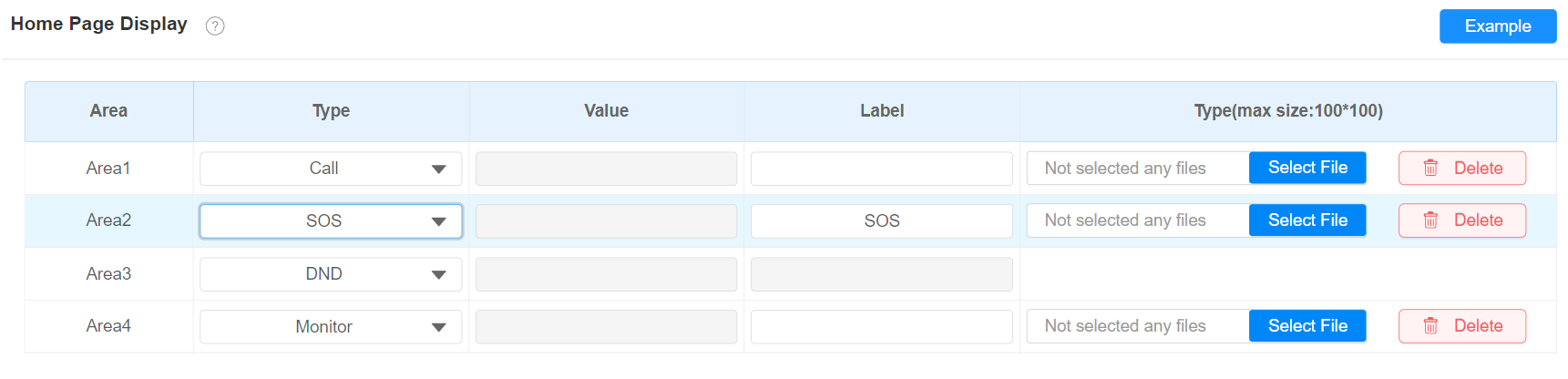
You also need to set up specific parameters on the device or the device web interface. To set it up on the device, go to Settings > Advance > SOS screen.
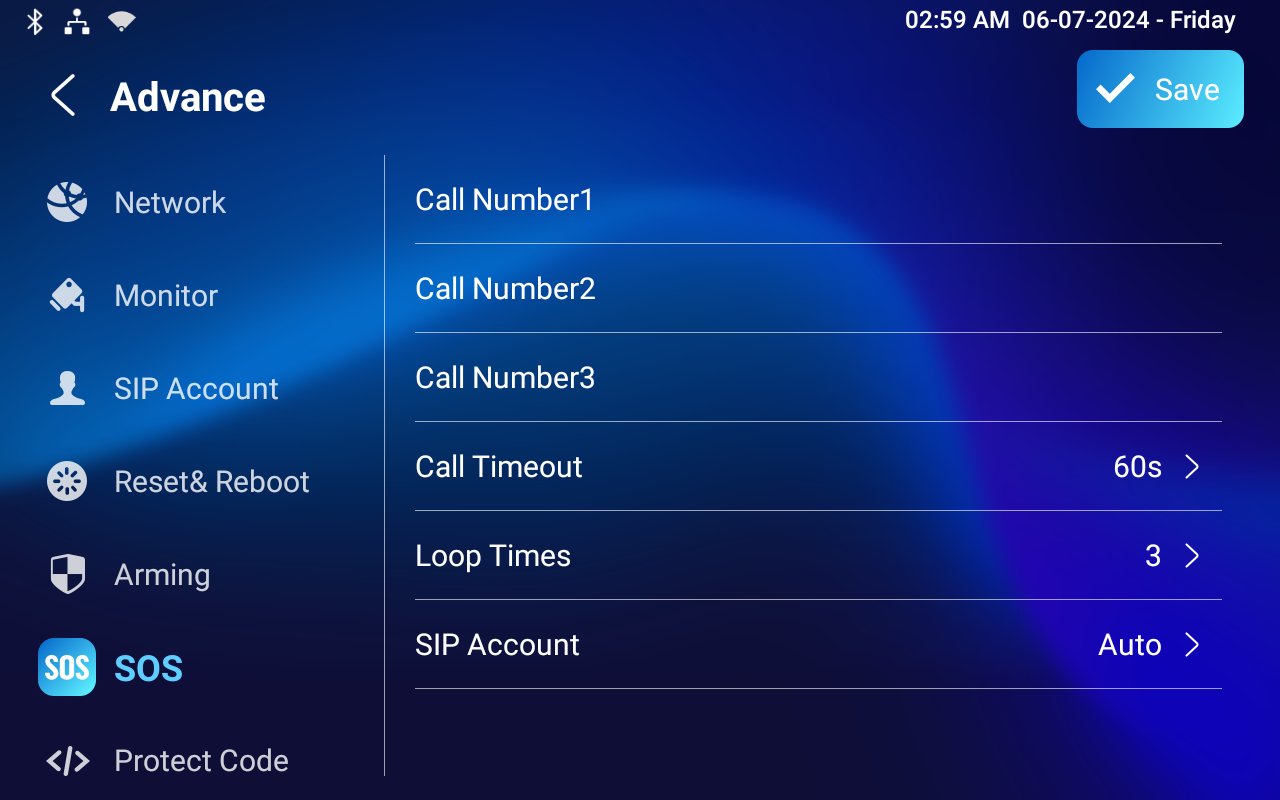
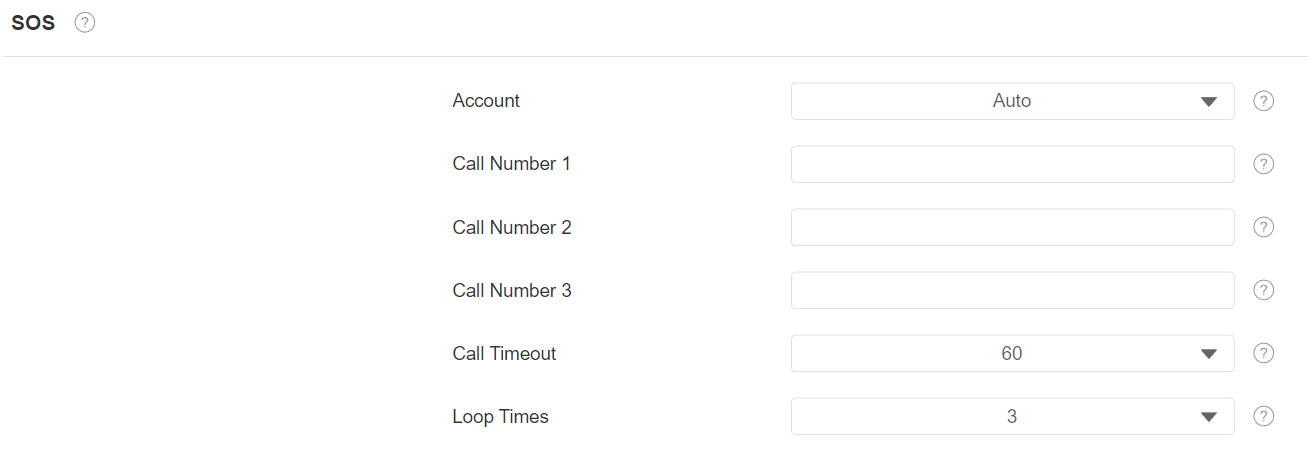
Call Number: 3 SOS numbers can be set up. Once users press the SOS key on the home page, indoor monitors will call out the numbers in order.
Call Timeout: The call duration for each number. When users call out and the other side does not answer within the timeout, indoor monitors will continue to call the next number.
Loop Times: Set up the call loop times.
SIP Account: The account to make SOS calls.
To set it up on the web interface, go to Device > Intercom > SOS interface.
Multicast Configuration
The Multicast function allows one-to-many broadcasting for different purposes. For example, it enables the indoor monitor to announce messages from the kitchen to other rooms or to broadcast notifications from the management office to multiple locations. In these scenarios, indoor monitors can listen to or send audio broadcasts.
Click here to watch the demonstration video.
To set it up, go to the web Device > Multicast interface.
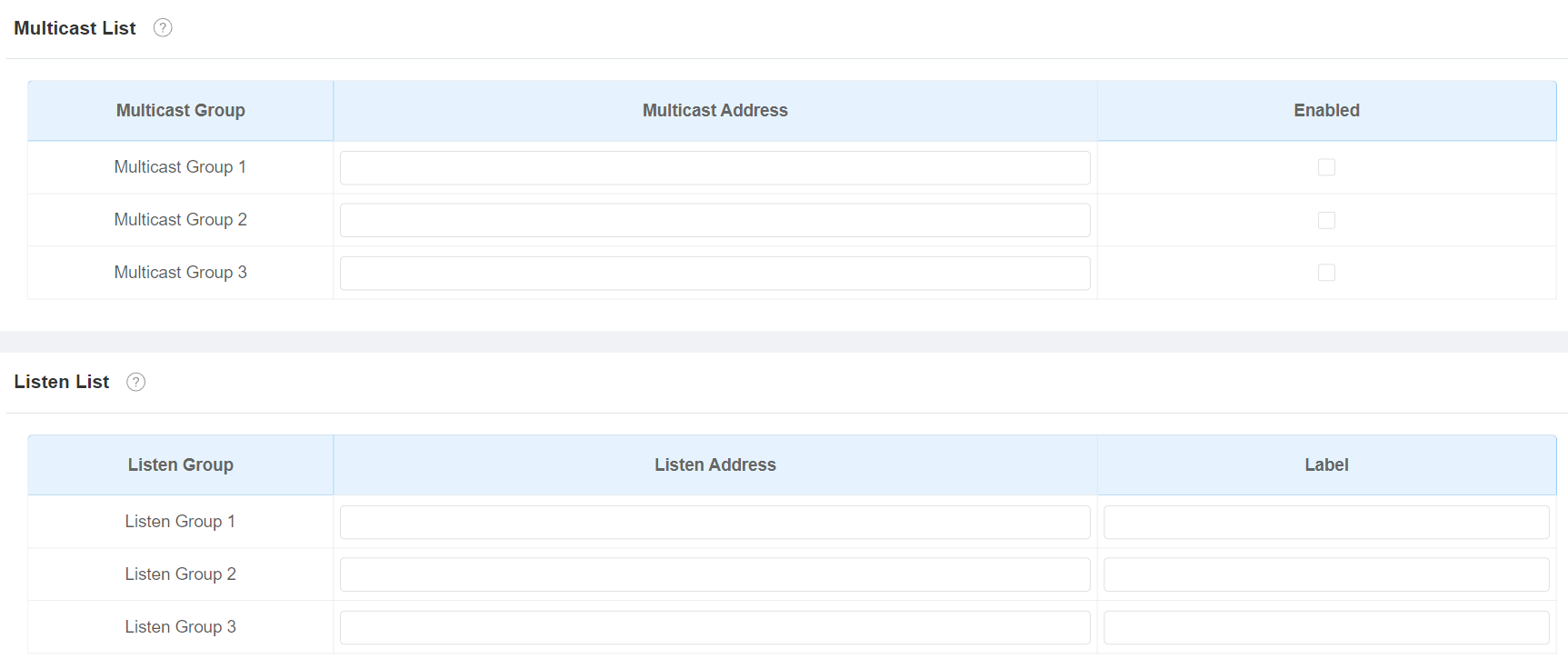
Multicast Address: The multicast IP address is the same as the listen address.
Listen Address: The listen address is the same as the multicast address.
Label: The label name will be shown on the calling screen.
Note
The multicast address entered should be within the specific range and not all multicast IP addresses are valid. Please consult Akuvox tech team for more information.
Call Forwarding Setting
Call Forward is a feature that allows for transferring incoming calls to another number. Users can set up call forwarding according to different situations, such as always forwarding calls, forwarding calls when the indoor monitor is busy, or when it doesn’t pick up the call.
Call Forwarding Setting on the Device
To set it up, go to the device Settings > Call Feature screen.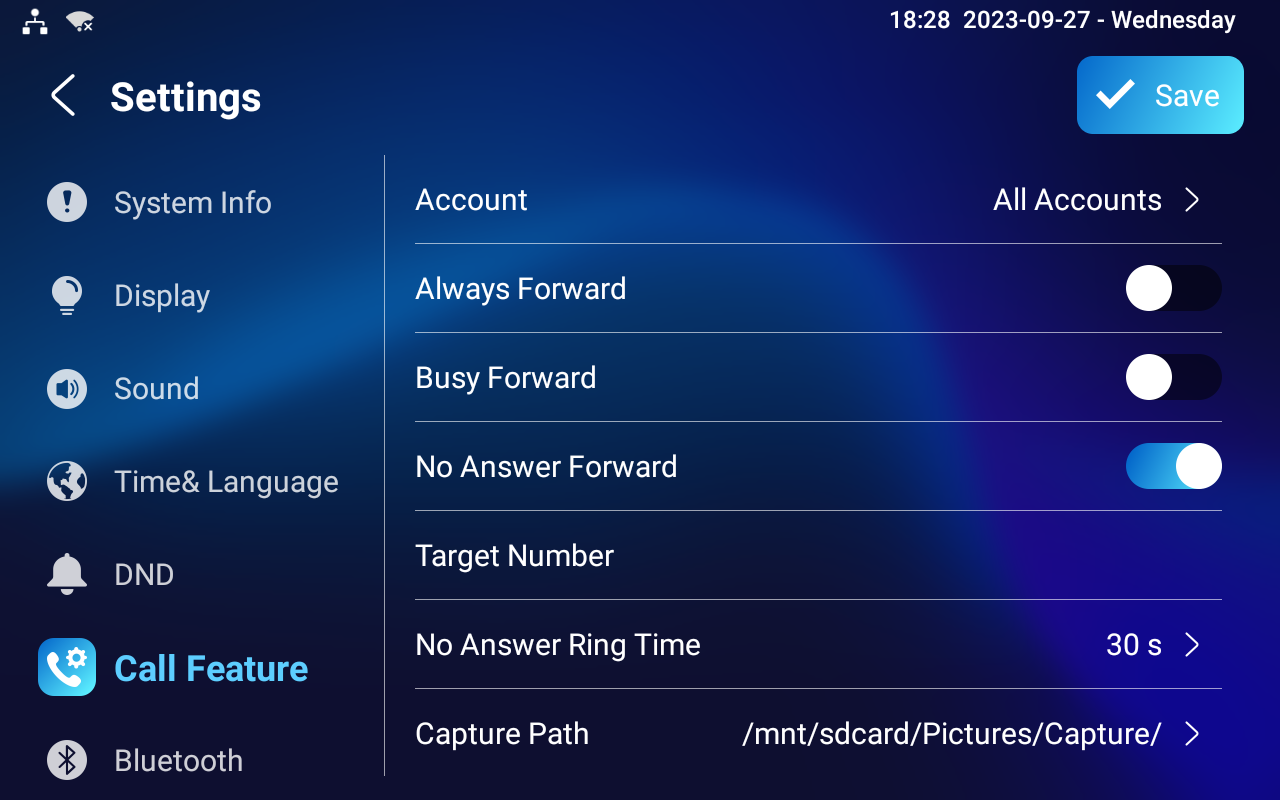
Account: The account to implement the call forwarding feature.
Always Forward: All incoming calls will be automatically forwarded to a specific number.
Busy Forward: Incoming calls will be forwarded to a specific number if the device is busy.
No Answer Forward: Incoming calls will be forwarded to a specific number if the call is not picked up within no answer ring time.
Target Number: Specify the forward number when Always Forward, Busy Forward, or No Answer Forward is enabled.
No Answer Ring Time(Sec): The time ranges from 0-120 seconds. This option appears when No Answer Forward is enabled.
Capture Path: The storage location for all the captured pictures.
Call Forwarding Setting on the Web Interface
Set up the forward function on the web Device > Call Feature > Call Forward interface.
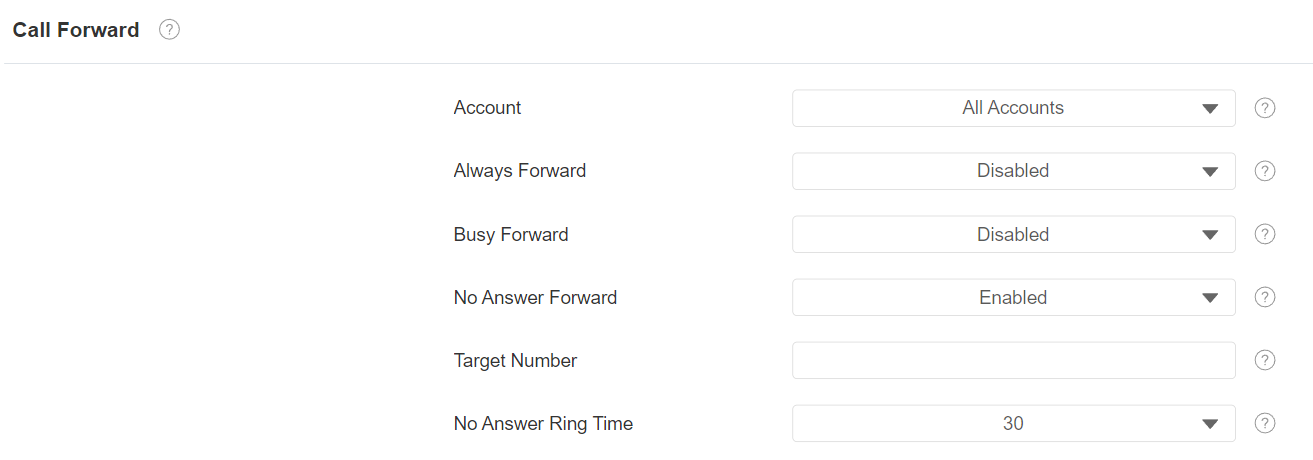
Always Forward: All incoming calls will be automatically forwarded to a specific number.
Busy Forward: Incoming calls will be forwarded to a specific number if the device is busy.
No Answer Forward: Incoming calls will be forwarded to a specific number if the call is not picked up within no answer ring time.
Target Number: The specific forward number when Always Forward, Busy Forward, or No Answer Forward is enabled.
No Answer Ring Time(Sec): The time ranges from 0-120 seconds. This option appears when No Answer Forward is enabled.
Web Call
The web call feature allows for making calls via the device’s web interface, commonly used for remote call testing purposes.
To set it up, navigate to the Contacts > Local Contacts > Dial Number interface. Enter the target number and select the account to dial out.
