Monitor and Image
Monitor Setting
You can add video streams using RTSP. If the Display in Call function is enabled, the video of the added monitor device will show up when it calls the indoor monitor.
To set it up, go to the Device > Monitor interface.
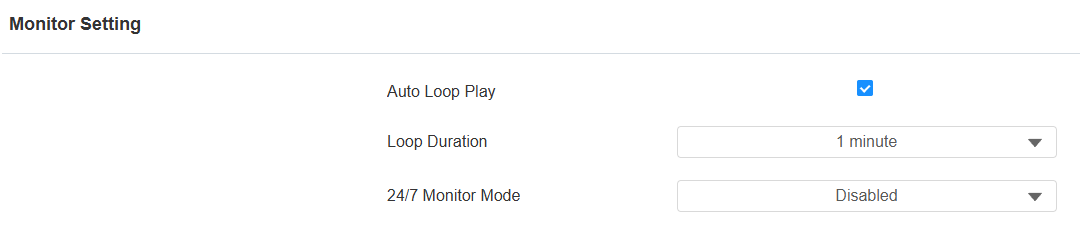
Auto Loop Play: Set whether to play all monitoring streams in rotation.
Loop Duration: The duration of playing each monitoring stream. The default is 1 minute.
24/7 Monitor Mode: When enabled, the indoor monitor displays the monitoring screen for 6 hours, then plays a 10-second screensaver before resuming the monitoring stream. If users tap the screen while the monitoring time has been active for the last half hour, the device extends the monitoring display for an additional 30 minutes.
This feature ONLY applies to door phones added via local RTSP.
Note
If devices are deployed on SmartPlus Cloud, the video stream from door phones is limited to 3 minutes and is not controlled by the 24/7 Monitor Mode.
On the Device > Monitor > Door phone section, click +Add to add a monitor.
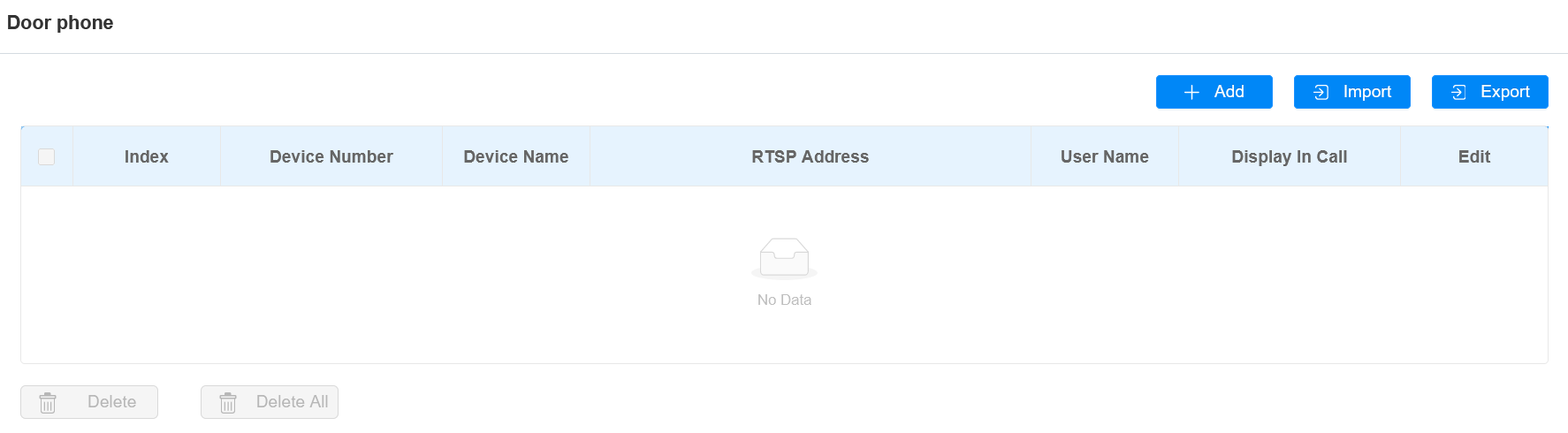
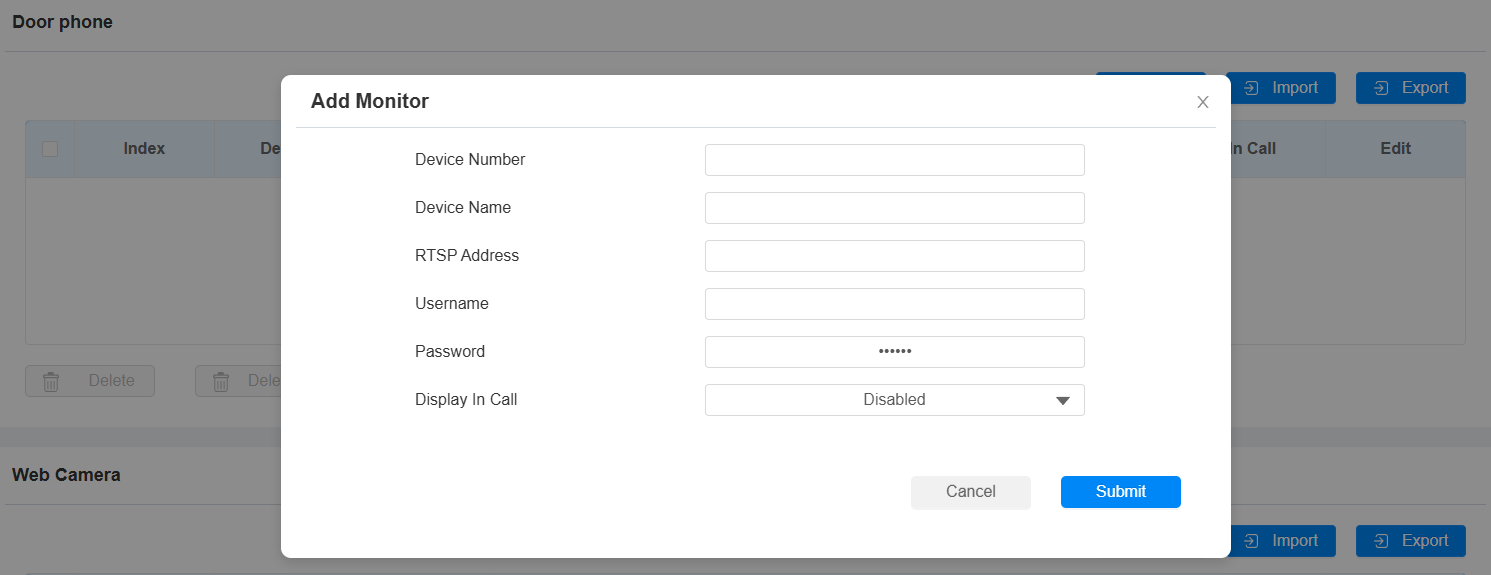
Device Number: The device's SIP/IP number for identification.
Device Name: The device name for identification.
RTSP Address: The RTSP address of the monitoring device. RTSP format: rtsp://Device IP address/live/ch00_0.
Username: The username of the monitoring device for authentication.
Password: The password of the monitoring device for authentication.
Display In Call: Enable it to display the monitoring video during a call.
You can export the monitoring device settings in a TGZ file and import a file in XML.

The monitor feature can also be set up on the device Settings > Advance Settings > Monitor screen.
.bmp "monitor(1).bmp")
.bmp)
Web Camera Setting
You can configure the monitor feature for third-party cameras on the web Device > Monitor > Web Camera interface.
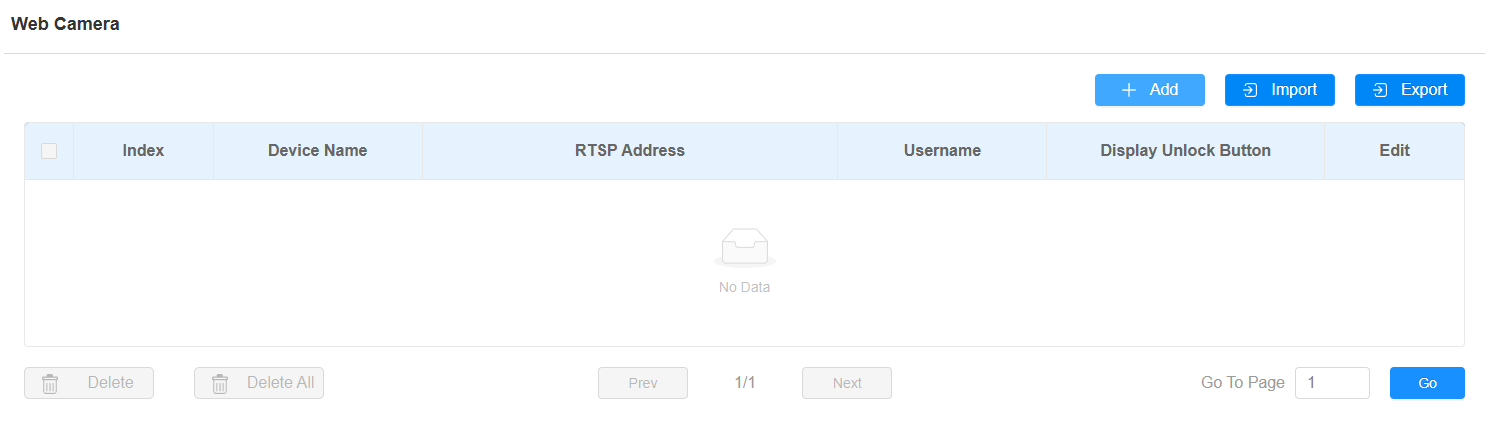
Click Add to add a camera.
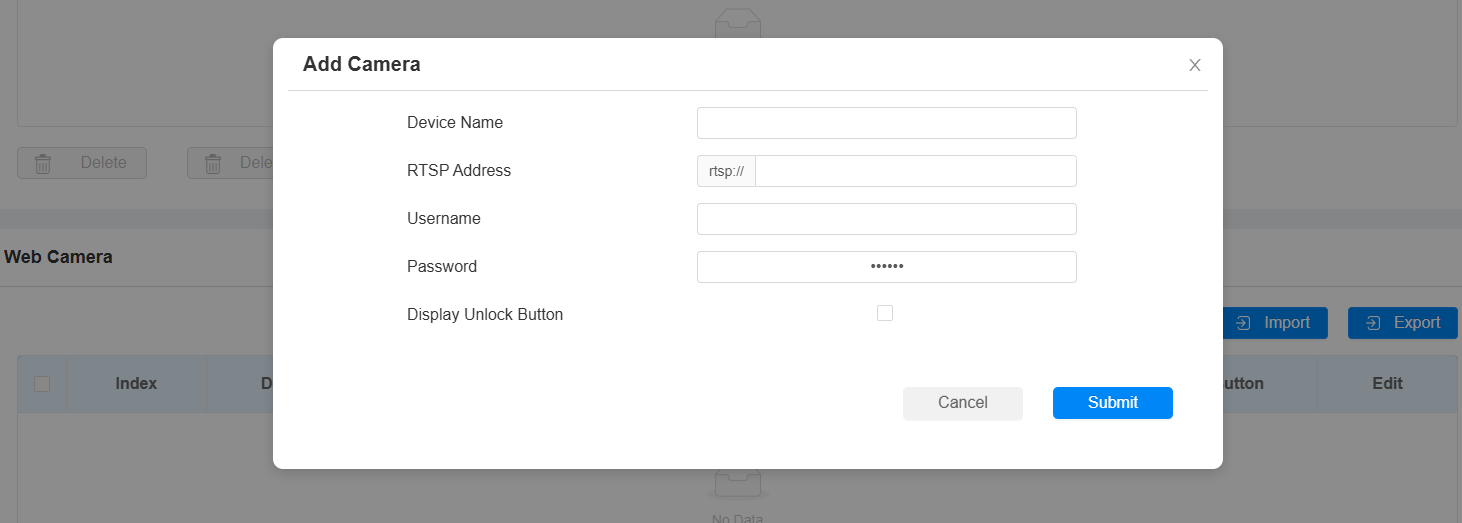
Device Name: The name of the third-party camera.
RTSP Address: The RTSP URL for the third-party camera.
Username: The username of the monitoring device for authentication.
Password: The password of the monitoring device for authentication.
Display Unlock Button: Disabled by default. Set whether to display the Unlock tab when viewing the live stream from the third-party camera.
You can import or export the monitor list in batches on the same interface. The export file is in TGZ format. The imported file only supports the XML format.

View Monitoring Streams
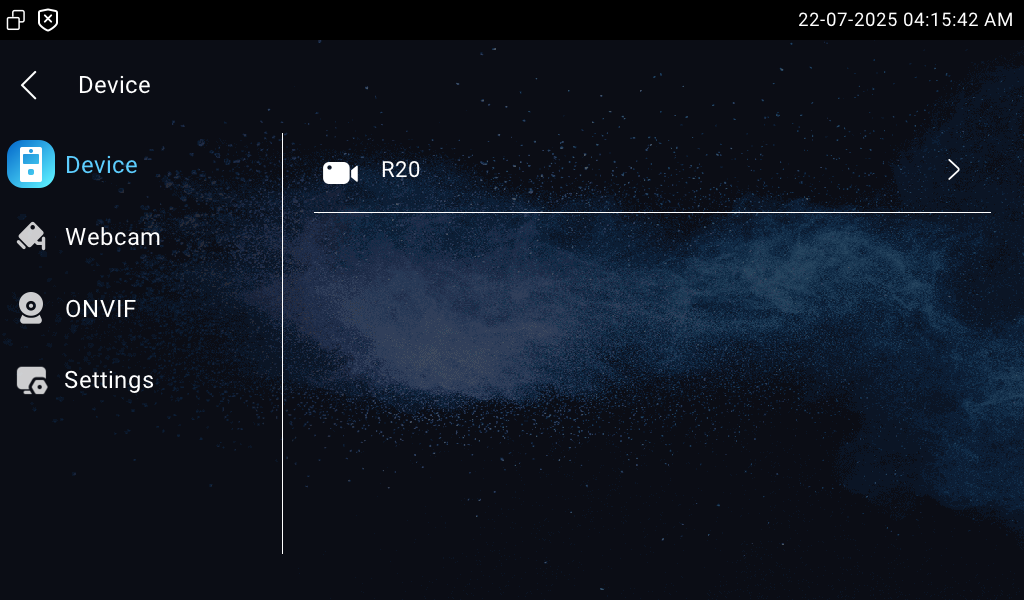
After adding the monitored device’s RTSP URL, tap Monitor on the home screen and tap the device name to view the stream.
(1).png "screenshots(11)(1).png")
RTSP Authentication
With RTSP authentication, users can monitor the indoor monitor via RTSP audio stream. This feature can be applied to, for example, listen to the baby in the baby’s room for safety.
To set it up, go to the Settings > Basic interface.
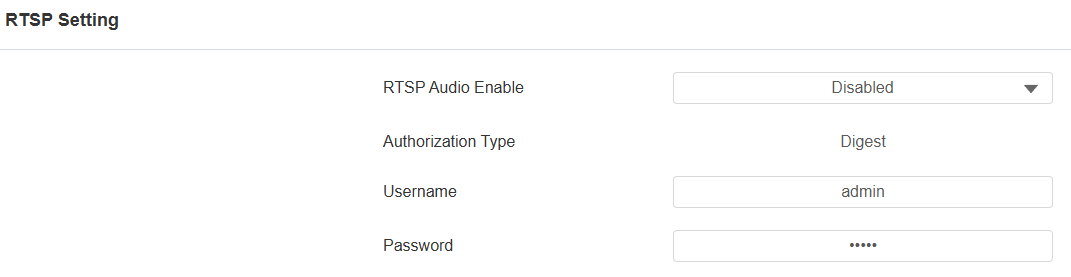
RTSP Audio Enable: Enable it if you want to monitor the device via RTSP audio stream.
Authorization Type: It is Digest by default.
User Name: Set the username for the authentication.
Password: Set the password for the authentication.
Alarm and Arming Configuration
The Arming function is designed to enhance home security by offering three modes with custom zone settings for connected sensors. When armed, the device will sound a siren and notify specific people if a sensor detects something unusual.
Set up Location-based Alarm Sensors
To set up a location-based alarm sensor, go to the web Arming > Zone Setting > Zone Setting interface.
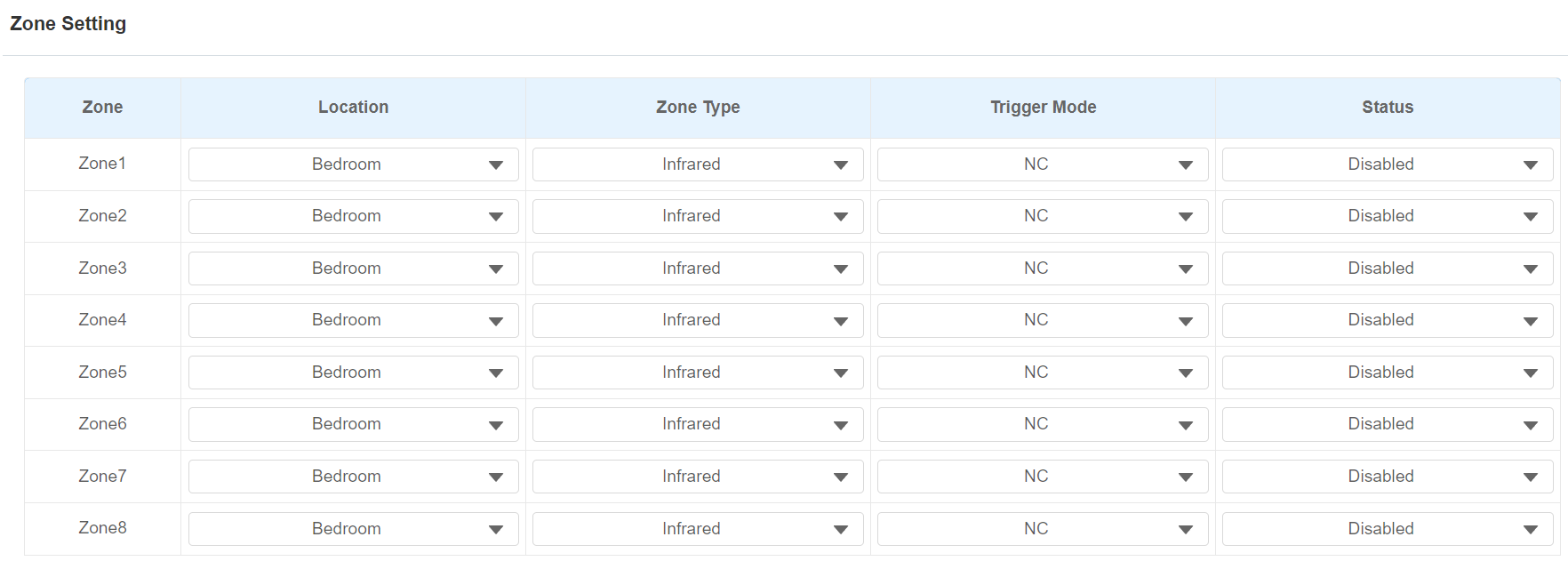
Location: Indicate where the alarm sensor is installed. There are ten location types: Bedroom, Gate, Door, Guest room, Hall, Window, Balcony, Kitchen, Study, and Bathroom.
Zone Type: The alarm sensor types.
Trigger Mode: Set sensor trigger mode between NC and NO.
Status: Set the alarm sensor status among three options: Enabled, Disabled, and 24H.
Enabled: The alarm needs to be set again after disarming.
Disabled: Disarm the alarm.
24H: The alarm sensor will stay enabled for 24 hours without setting up the alarm manually again after the alarm is disarmed. If any of the zones are enabled or set to 24H, the alarm-related icons will be displayed on the home screen for quick access.
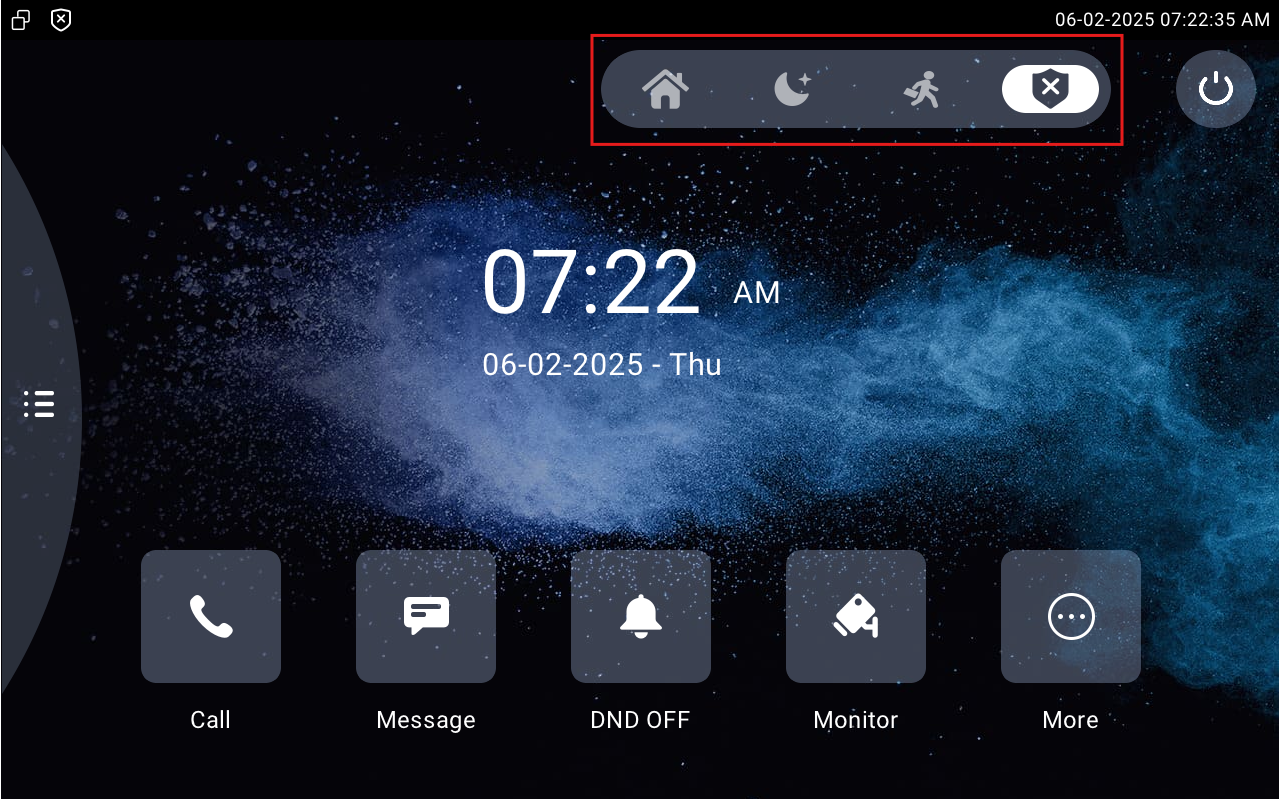
You can also set up alarm sensors on the Settings > Advance Settings > Arming screen.
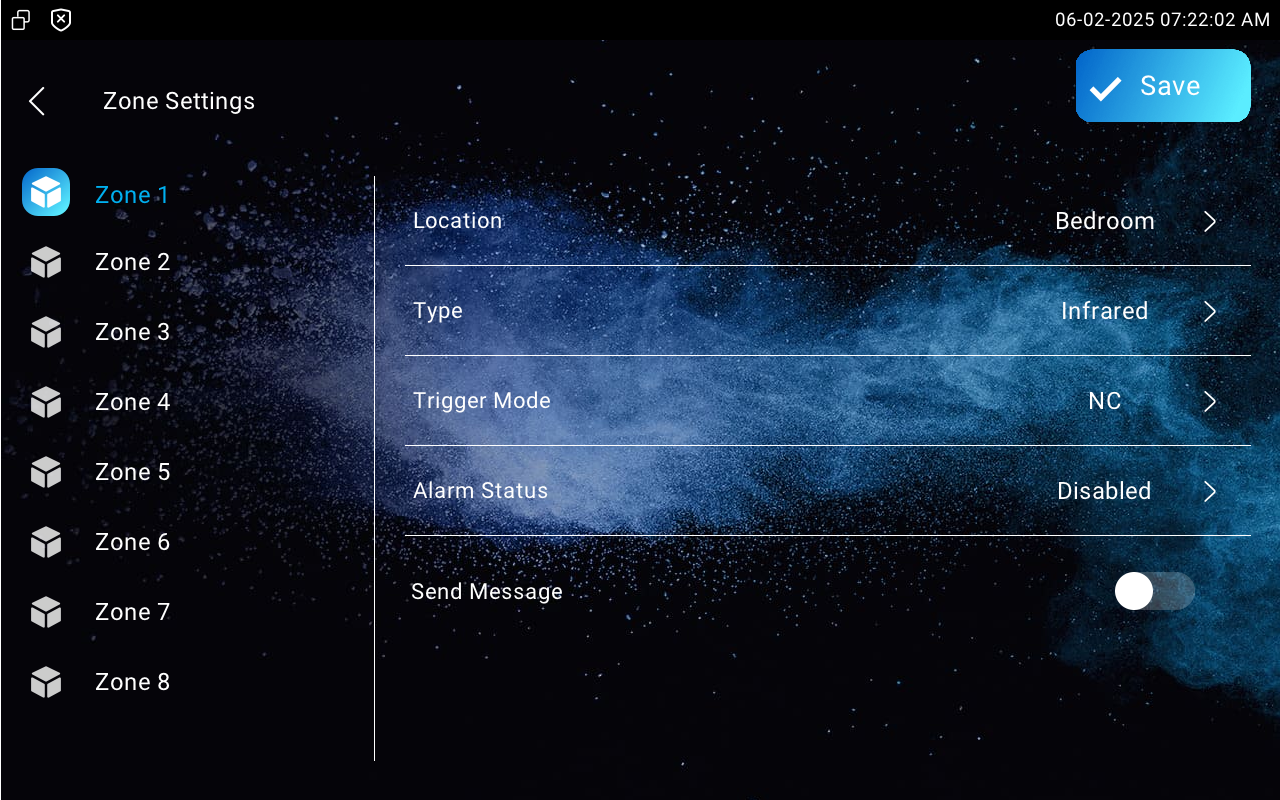
Send Message: If enabled, when the alarm is triggered, the device can send messages.
Select an Arming Mode
To select an arming mode, go to the Arming > Arming Mode interface.

Synchronize Arming & Alarm: It is disabled by default. When enabled, the device synchronizes arming and alarms with other indoor monitors in the same room (if deployed on SmartPlus Cloud) or within the same node (if deployed on SDMC or on-premise).
After displaying the Arming tab on the device screen, users can switch arming mode on the Arming screen.
Set the arming tab display on the Device > Display Setting interface.
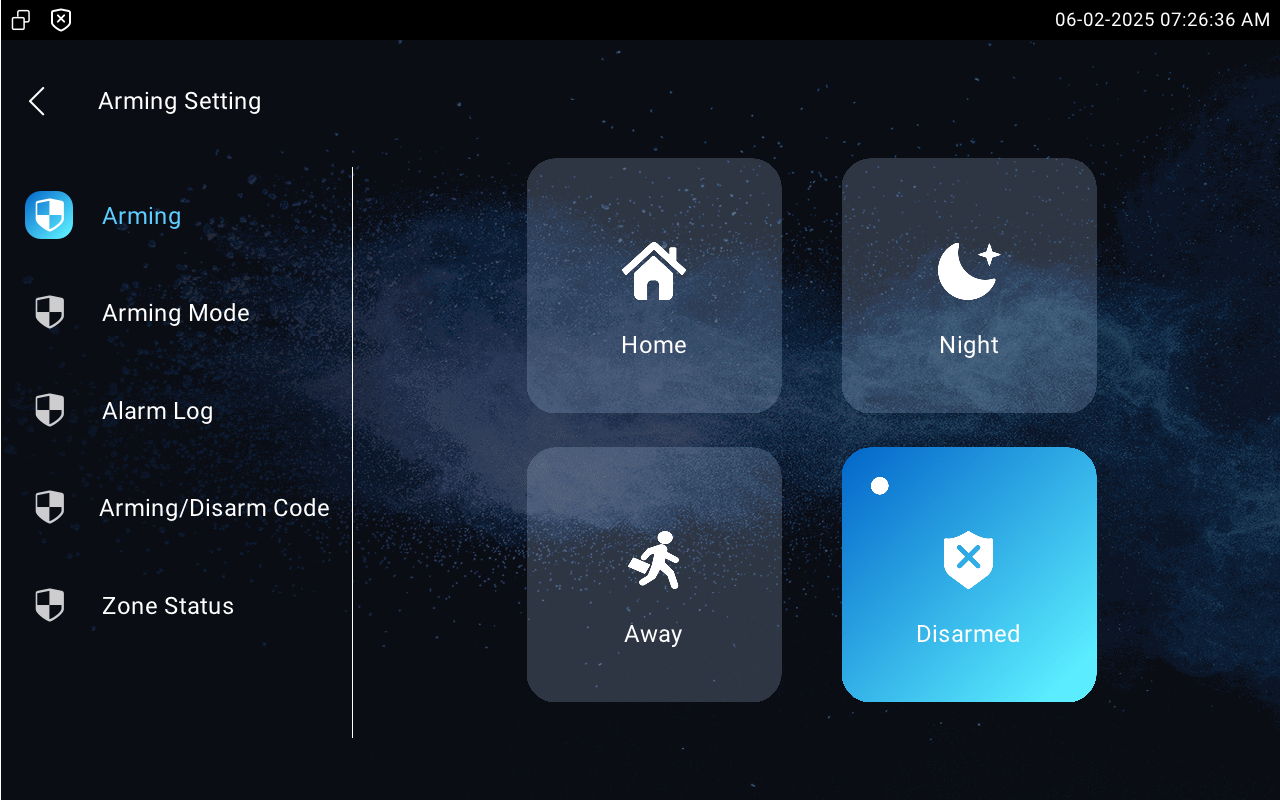
Set up Alarm Sensors in Different Arming Modes
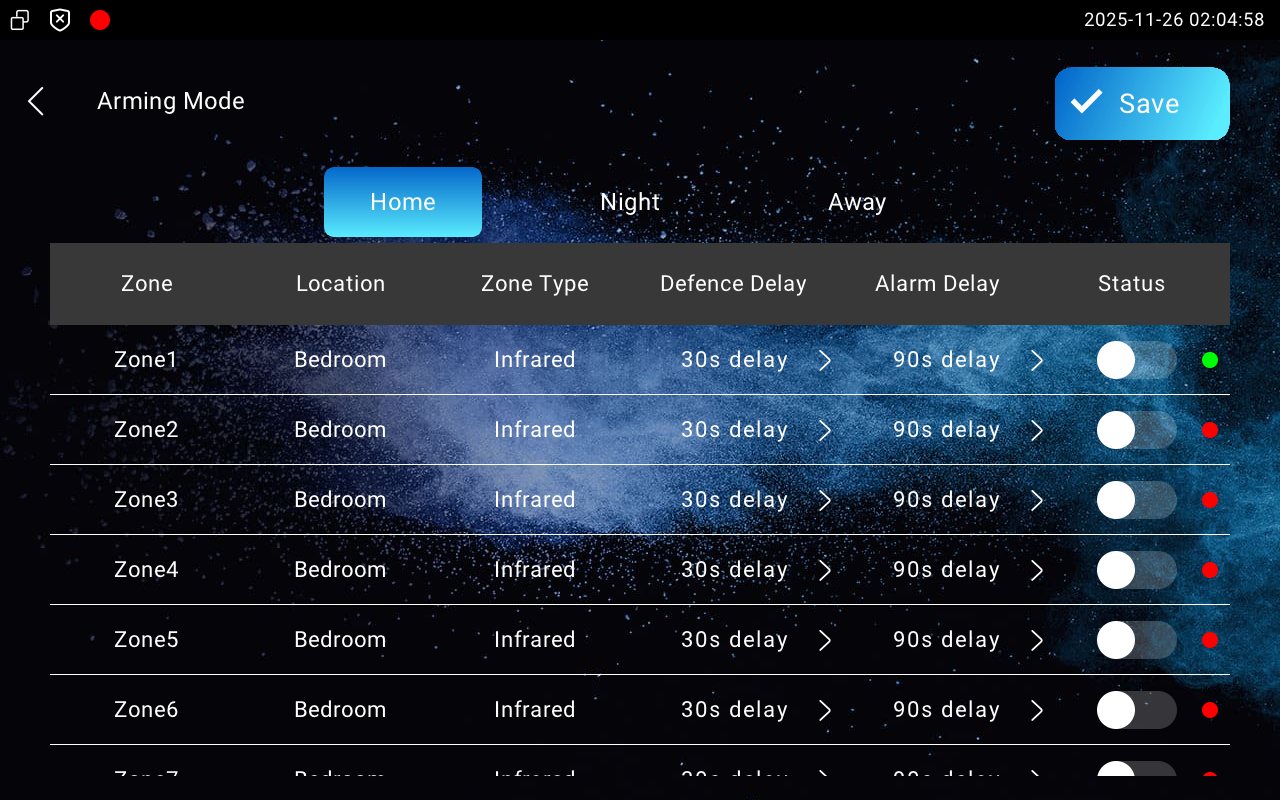
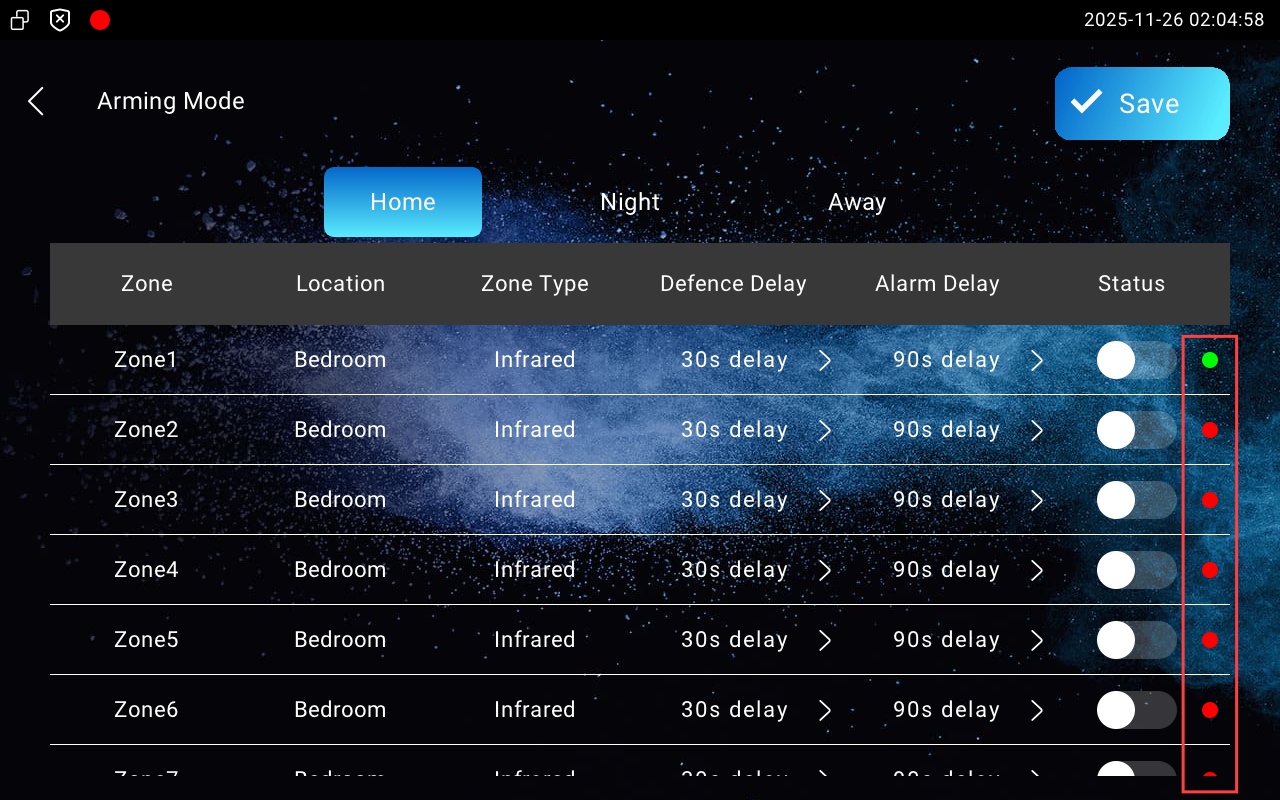
To configure the alarm in different modes, go to the Arming > Arming Mode interface.
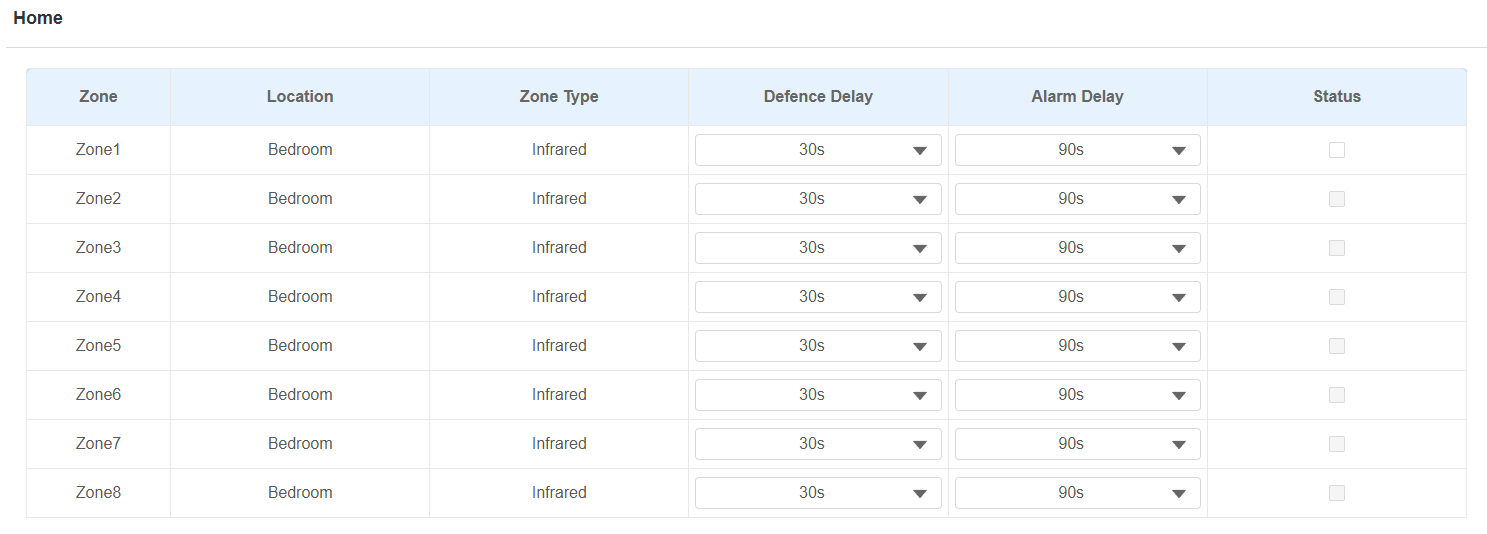
Location: Display which location the detection device is in, including Bedroom, Guest room, Hall, Window, Balcony, Kitchen, Study, and Bathroom.
Zone Type: Display the alarm sensor type.
Defence Delay: It means when users change the arming mode from other modes, there will be 30 seconds delay time to get activated.
Alarm Delay: It means when the sensor is triggered, there will be 90 seconds delay time to announce the notification.
Status: Enable or disable Arming Mode on the corresponding zone.
You can also set it up on the Arming > Arming Mode screen.
Set up the Disarm Codes
To configure the arming and disarm codes, go to the Arming > Disarm Code interface.
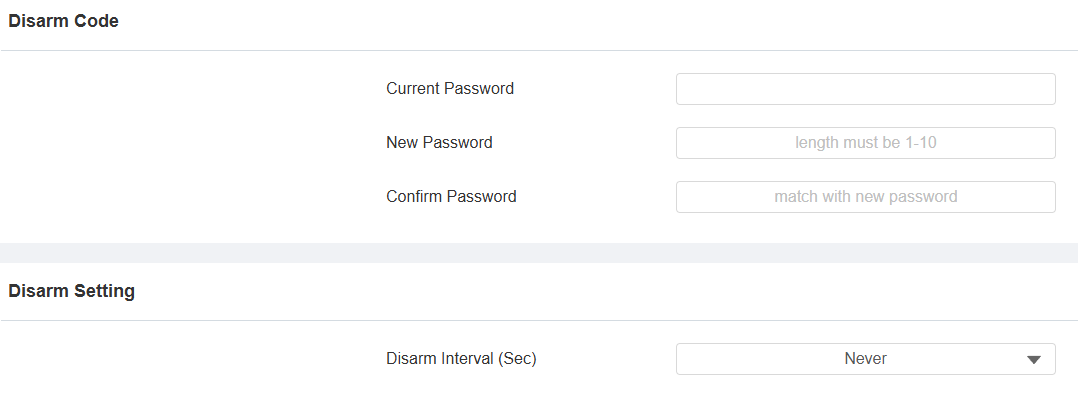
Disarm Interval(Sec): Set the alarm sound duration after the alarm is triggered.
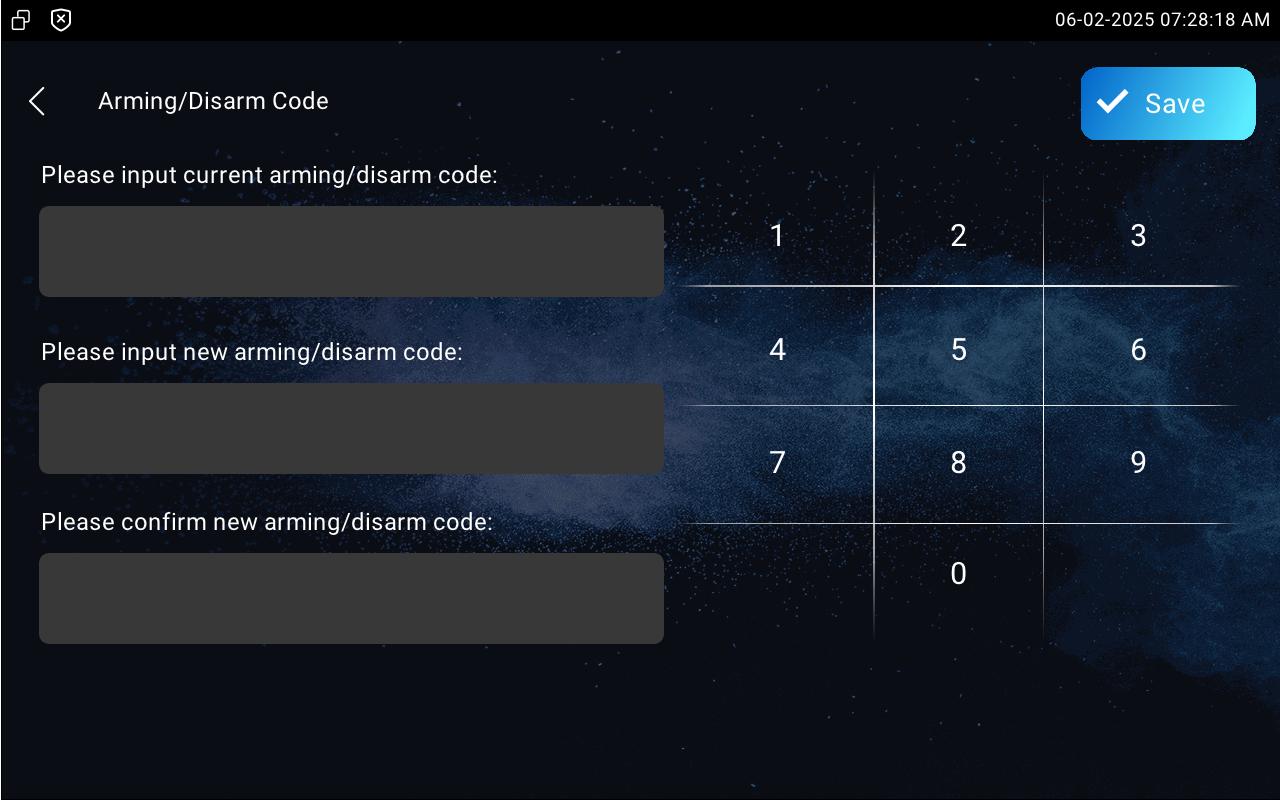
You can also set it up on the Arming > Arming/Disarm Code screen.
Learn Arming Indicator
The status bar can display the status of zones.
The red indicator means any of the enabled zones is in an abnormal status.
The green indicator means all zones are in a normal status.
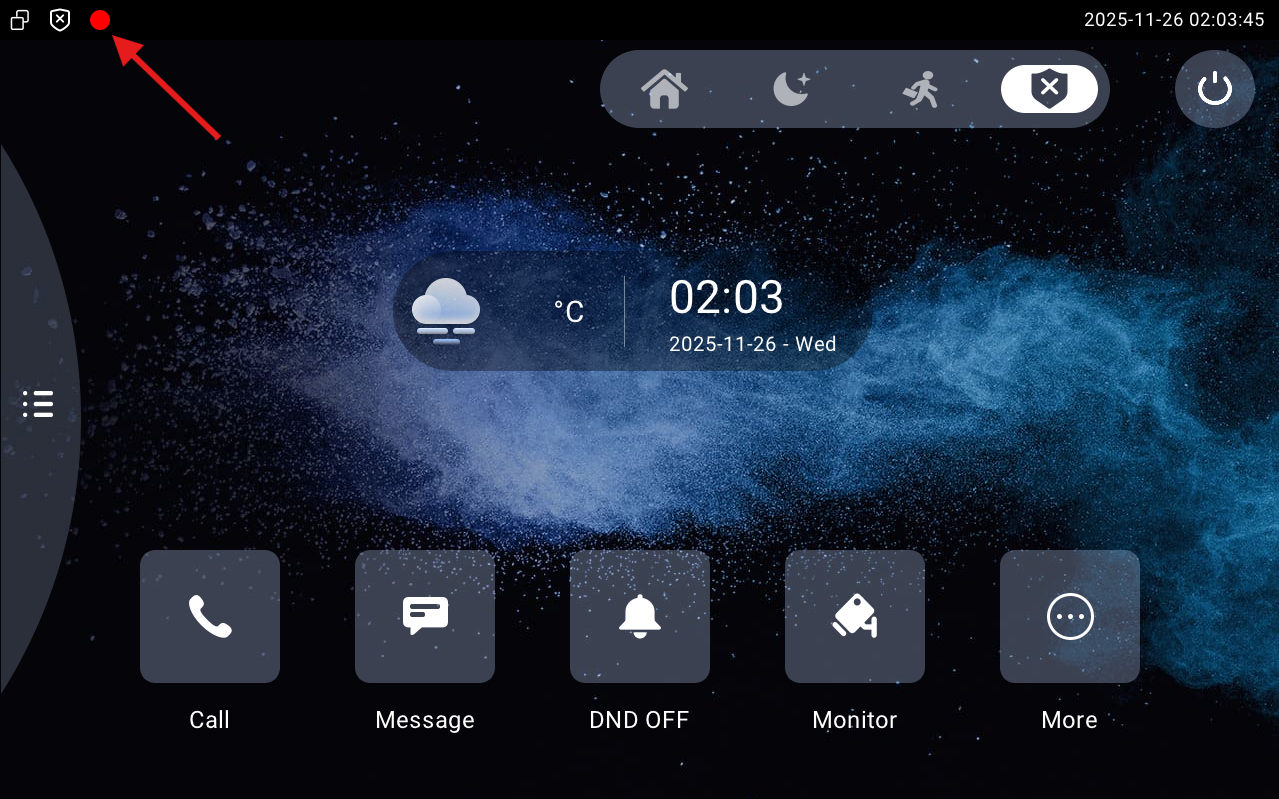
The indicators also display on the Arming > Arming Mode screen.
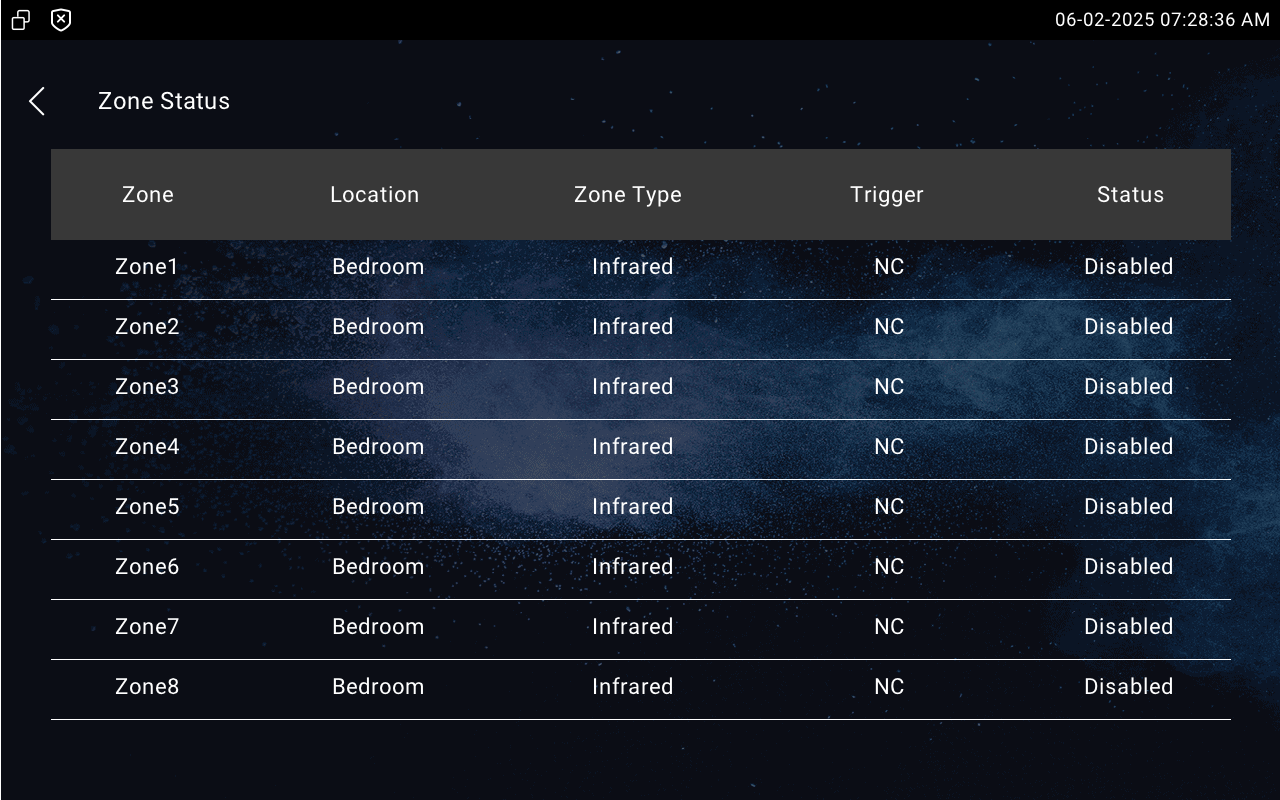
Check Zone Status
Check the zone status on the Arming > Zone Status screen.
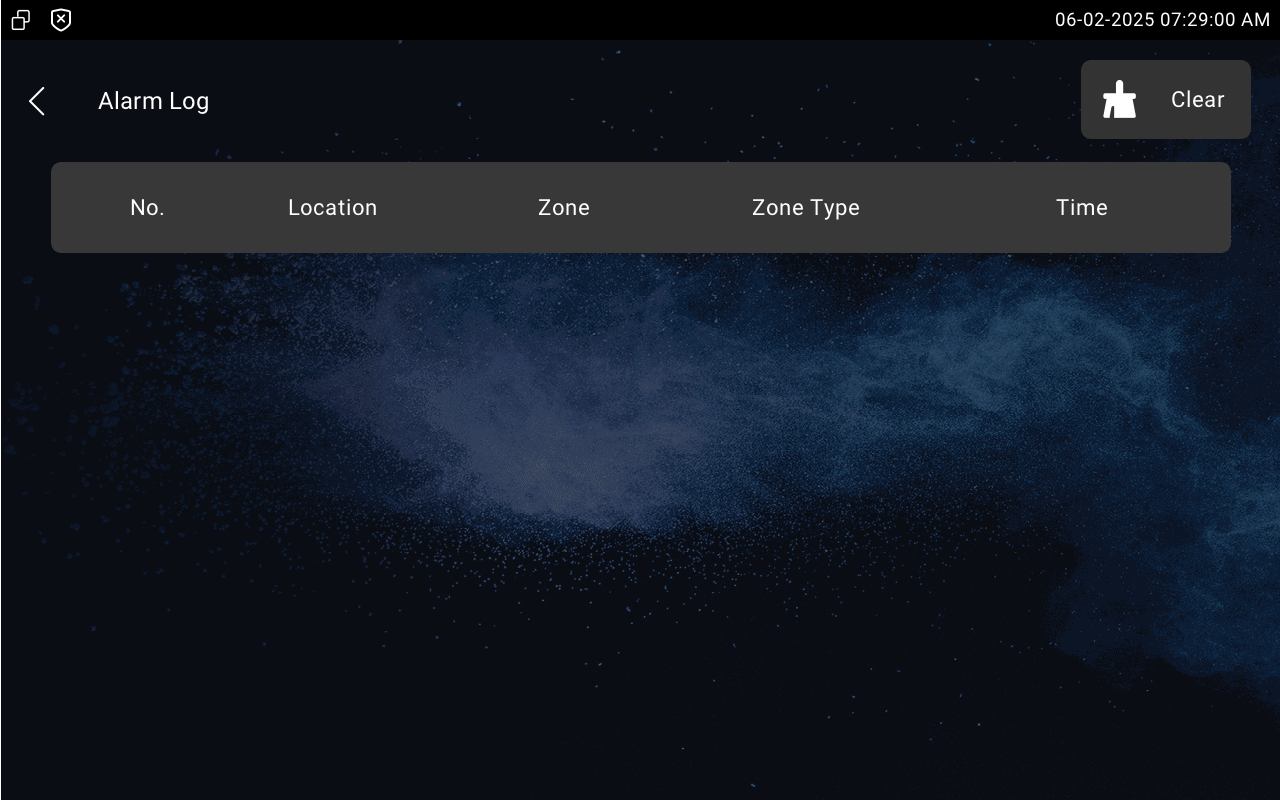
Check Alarm Logs
Check the alarm log on the Arming > Alarm Log screen.
Configure Alarm Text
Once the alarm sensor is configured, you can access the device's web interface to personalize the alert content displayed on the screen when an alarm is triggered.
To set it up, navigate to the web Arming > Zone Setting > Customized Alarm interface.
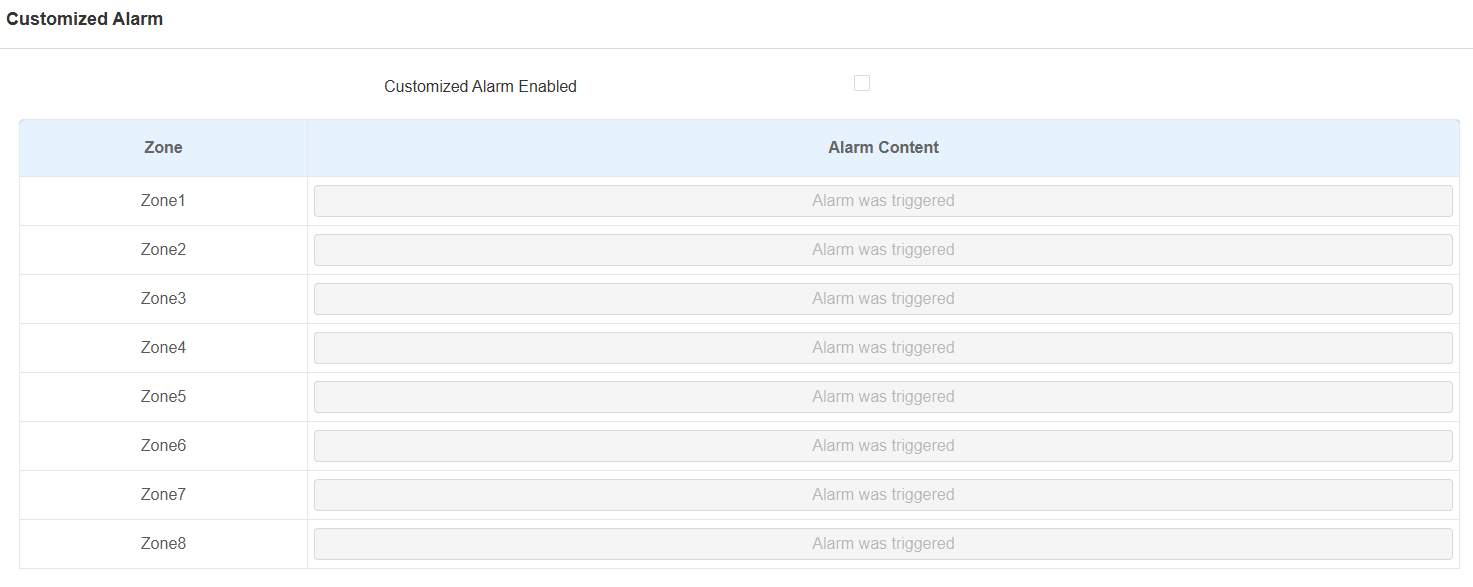
Alarm Content: The alarm text will be displayed on the device screen when an arming is triggered.
Configure Alarm Ringtone
You can upload a customized alarm ringtone by choosing the local audio file on the web Device > Audio interface.

Alarm Action Configuration
When the alarm sensor is triggered, it can start different actions, such as HTTP commands, SIP messages, calls, and local relay activation after setup.
To select and set up actions, go to the web Arming > Alarm Action interface.
HTTP Command
To set up the HTTP command action, you can select Enabled in the Send HTTP field to enable the actions for the alarm sensor installed in different locations. Then enter the HTTP command provided by the device manufacturer on which the action is to be carried.
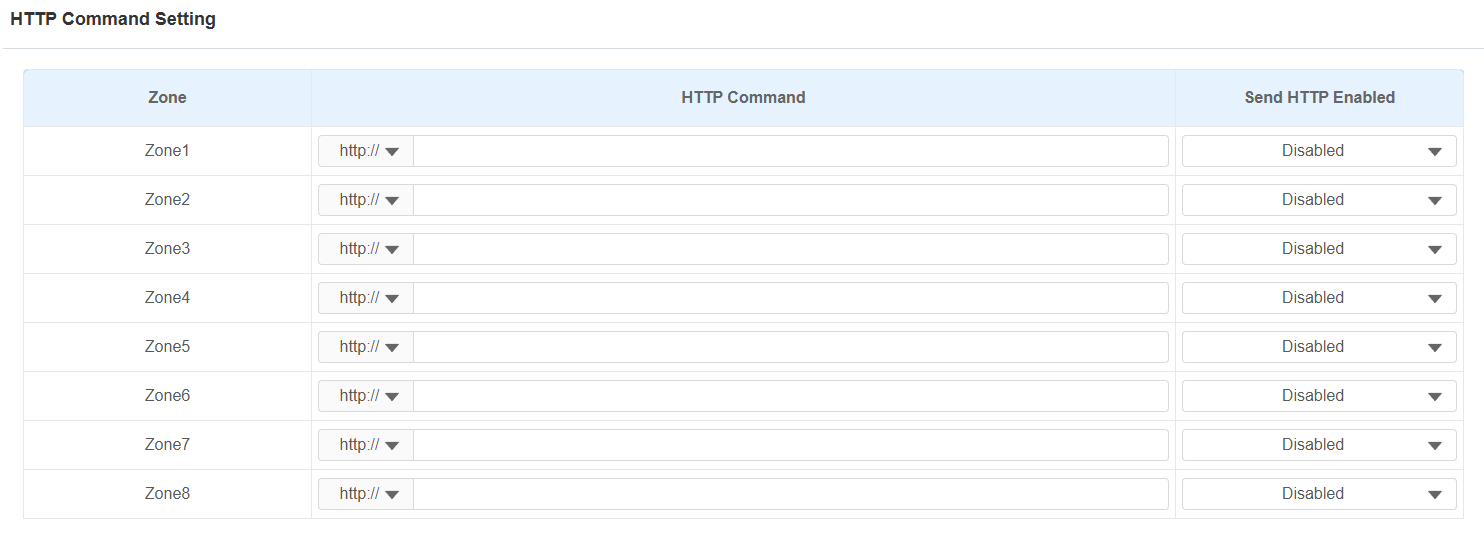
Send HTTP Enabled: Enable it if you want the action to be implemented on a designated third-party device.
HTTP Command: Enter the HTTP command provided by the third-party device manufacturer.
SIP Message
The device can send messages to a designated device when the alarm is triggered. To set this up, enter a SIP number or IP address along with the message content.
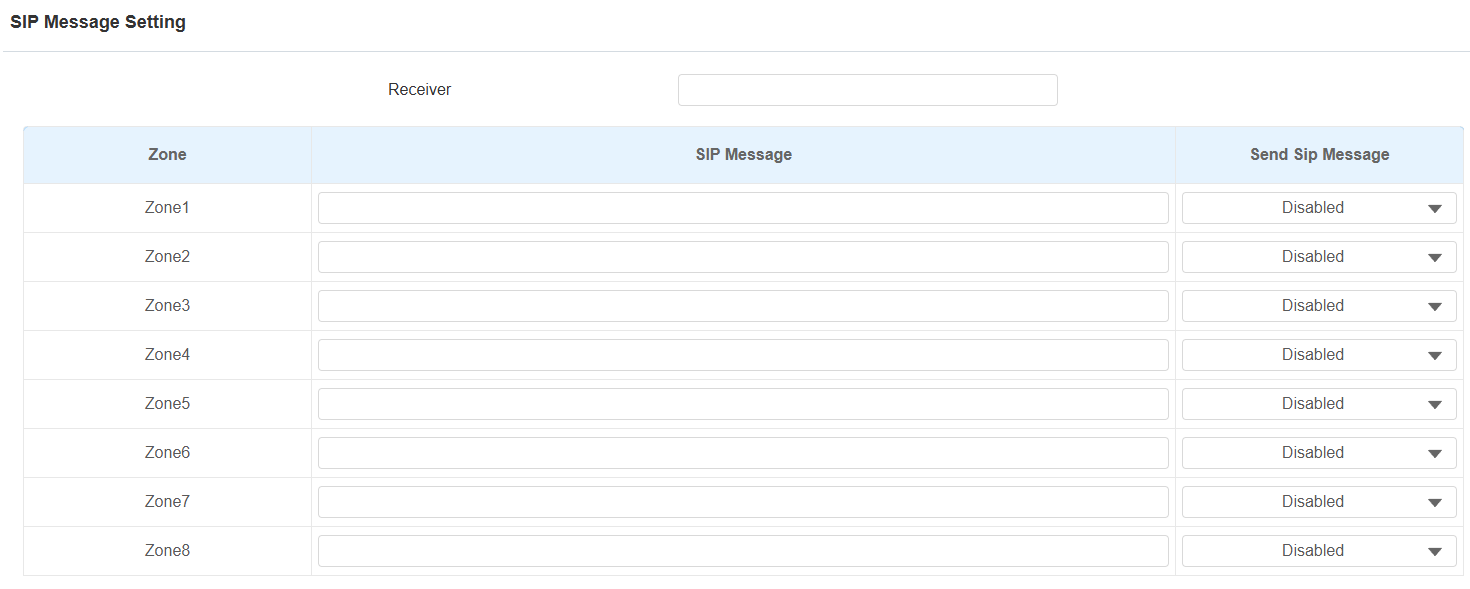
Receiver: The SIP number to receive the message.
SIP Message: The message sent to the designated SIP number when the alarm is triggered.
SIP Call
To enable the device to make a call when the alarm is triggered, enter the SIP or IP number of the called party. Additionally, you can allow the indoor monitor to sound a siren simultaneously.
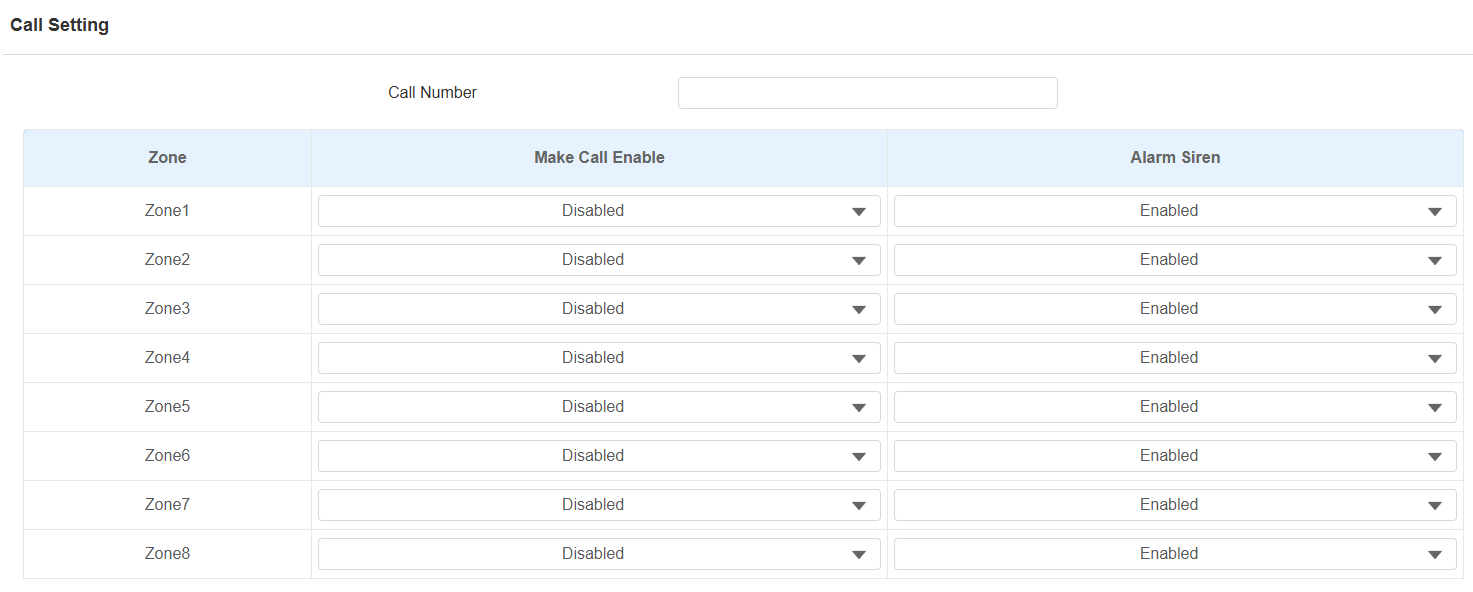
Call Number: The SIP number or IP number to receive the calls when the alarm is triggered.
Make Call Enable: Enable it so that a call will be made to the designated SIP or IP number when the alarm is triggered.
Alarm Siren: Enable it to trigger an alarm siren on the indoor monitor when the alarm is triggered.
Local Relay
You can select the local relay to be triggered by the alarm.
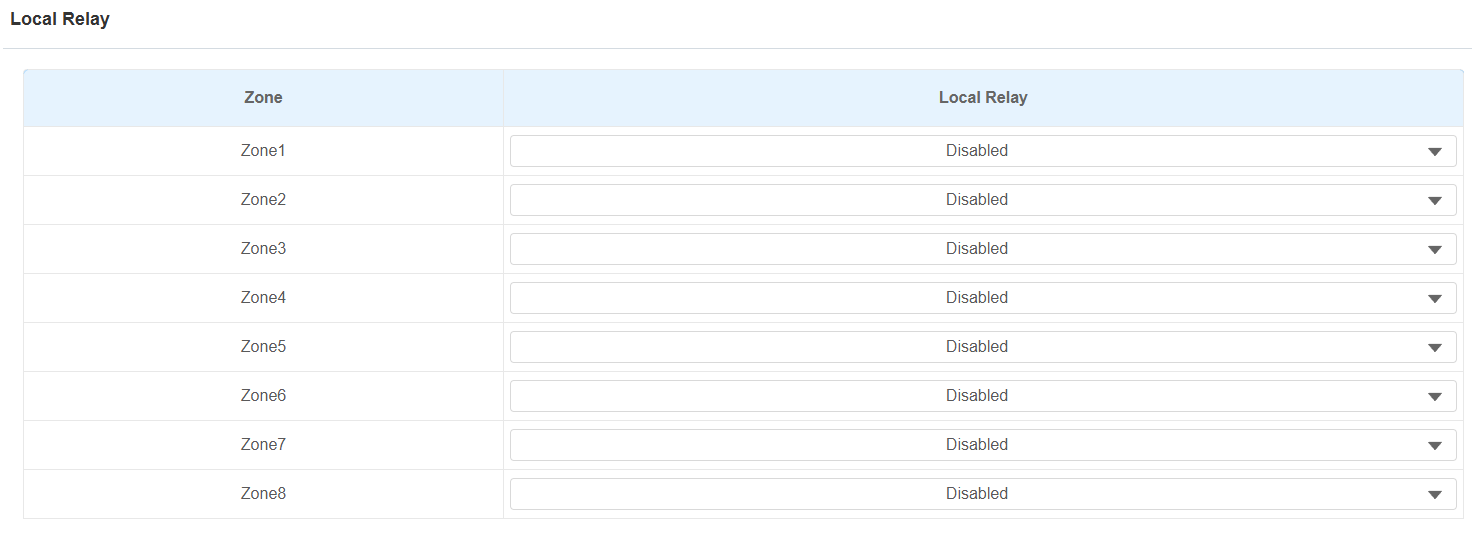
Local Relay: Enable it if you want the local relay to be triggered with the sensor.
Send Alarm Notifications to Third-Party Servers
The device can send alarm notifications to R49 or a third-party server.
Set it up on the Arming > Alarm Action interface.

Target Type:
Device: When selected, enter R49’s IP address.
Third Party Server: When selected, enter the third-party server address. The notification will be sent in the HTTP URL form.
Both: Send notifications to both the R49 and the third-party server.
Screen Unlock Setting
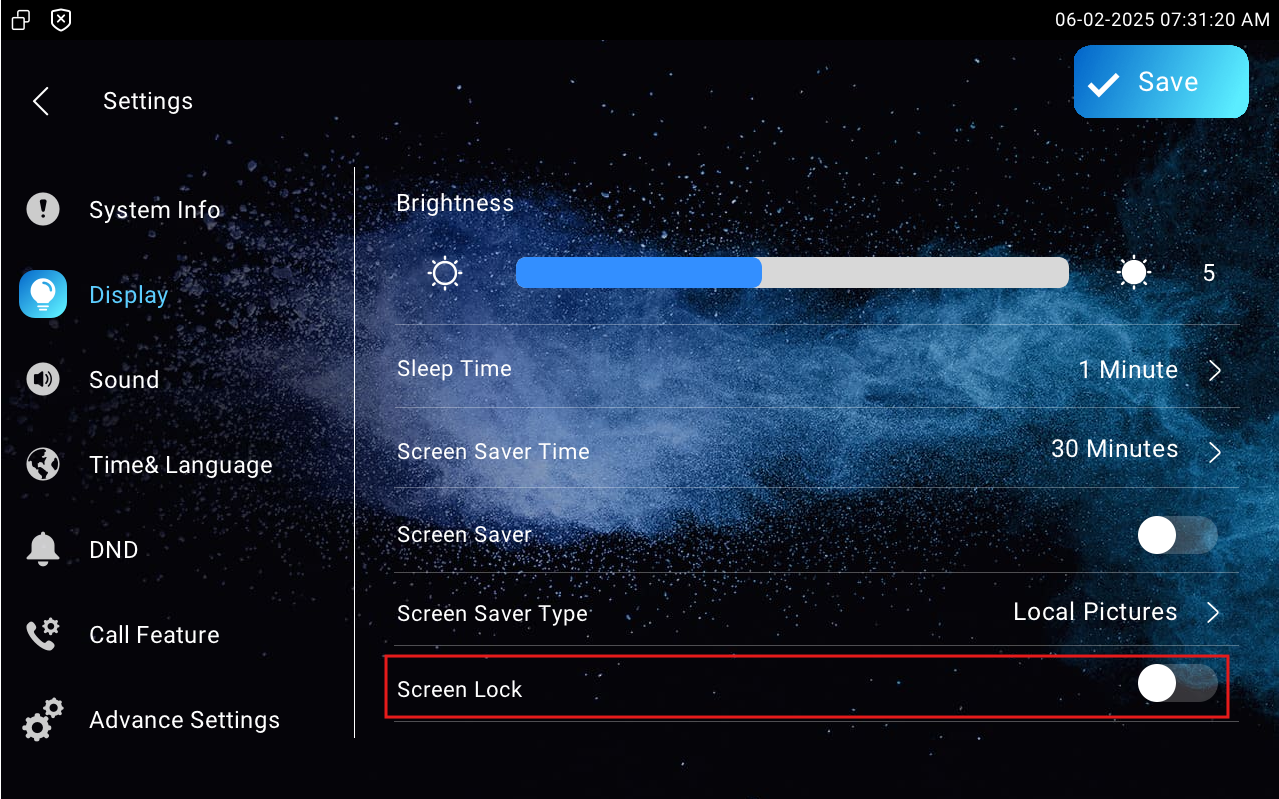
To prevent unauthorized access to the device when it is not being used, enable the Screen Lock function. This feature automatically locks the device after a period of inactivity, requiring a password to unlock.
The screen unlock feature can be enabled directly on the device Settings > Display screen.
The default PIN code is empty. Tap the ✔ icon to unlock the screen.
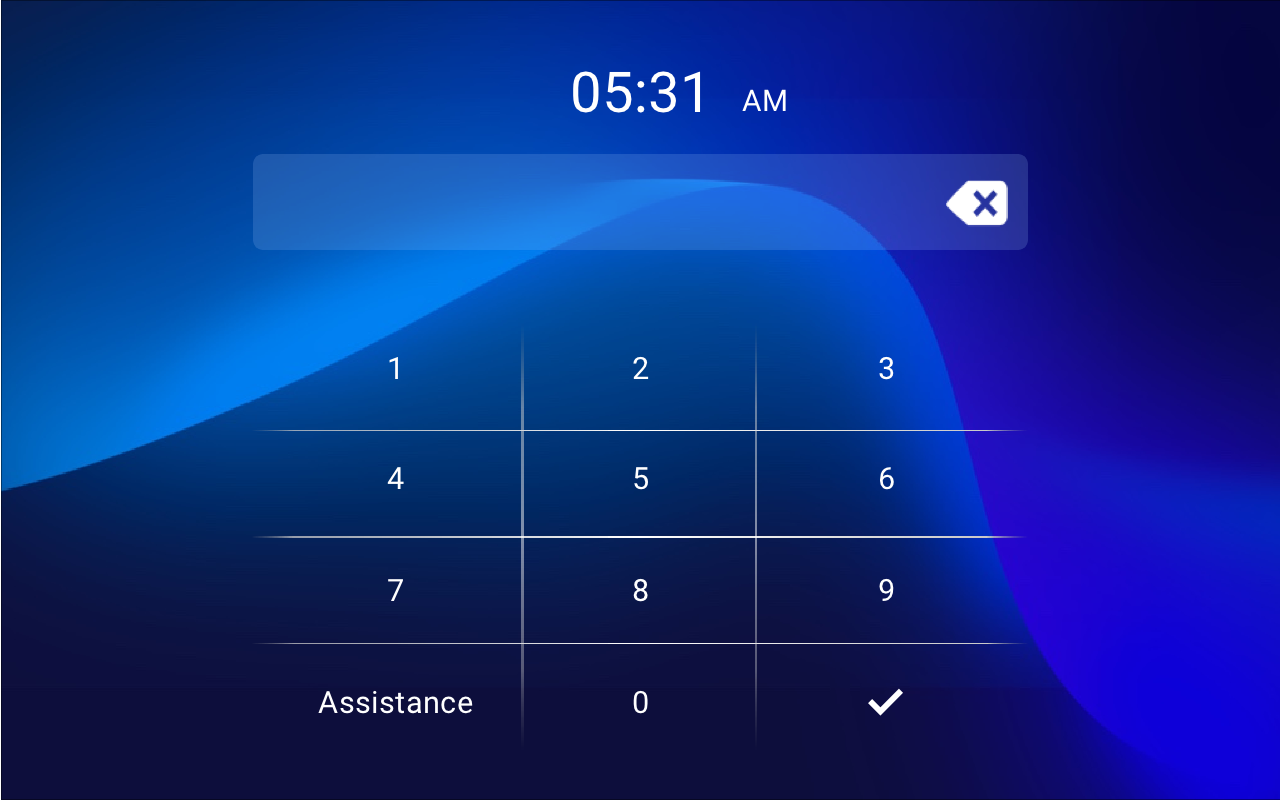
Screen Unlock by PIN Code
To unlock the screen, users need to enter the preset PIN code.
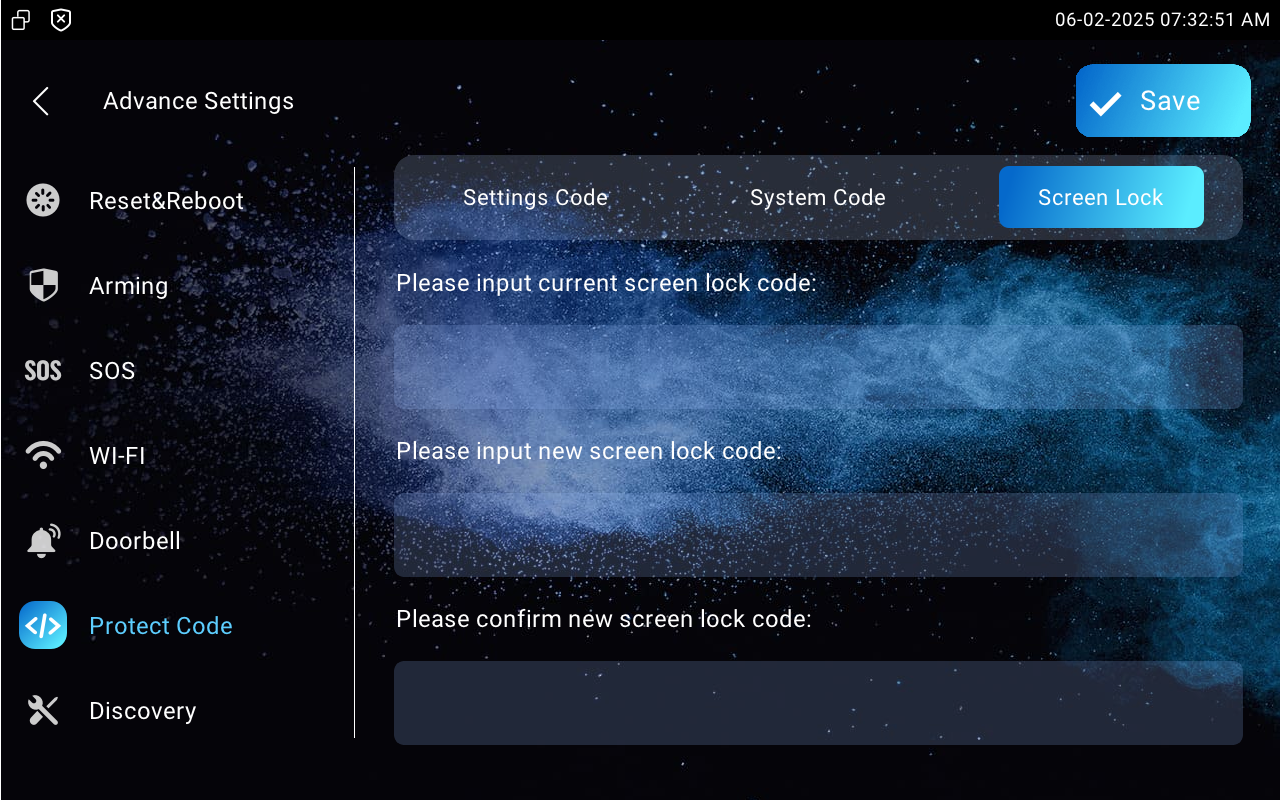
Navigate to the Settings > Advance Settings > Protected Code screen and select Screen Lock to change a new password.
To change the screen lock password, navigate to the device Settings > Advance Settings > Protect Code > Screen Lock screen.
Voice Encryption
Secure Real-time Transport Protocol (SRTP) is a protocol derived from the Real-time Transport Protocol (RTP). It enhances the security of data transmission by providing encryption, message authentication, integrity assurance, and replay protection.
To set it up, navigate to the web Account > Advanced > Encryption interface.

Voice Encryption:
Disabled: The call will not be encrypted.
SRTP(Compulsory): All audio signals(technically speaking, it is RTP streams) will be encrypted to improve security.
SRTP(Optional): Encrypt the voice from the caller. If the caller also enables SRTP, the voice signals will also be encrypted.
ZRTP(Optional): The protocol that the two parties use to negotiate the SRTP session key.
Web Interface Automatic Log-out
You can set up the web interface's automatic log-out timing, requiring re-login by entering the user name and the passwords for security purposes or for the convenience of operation.
To set it up, go to the web Security > Basic > Session Time Out interface.

Power Output Setting
The indoor monitor can serve as a power supply to the Akuvox door phone with 12V power supply for example E10. You can enable the power output, then connect the door phone to the RJ45 port on the indoor monitor. Also, you can connect E10 to the 12_out port for the power supply.
To enable it, navigate to the web Settings > Basic > Power Output Enable interface.

High Security Mode
High security mode is designed to enhance the security. It employs encryption across various facets, including the communication process, door opening commands, password storage methods, and more.
To set it up, navigate to the Security > Basic interface.

Important Notes
1. The High Security mode is off by default when you upgrade the device from a version without the mode to one with it. But if you reset the device to its factory settings, the mode is on by default.
2. This mode makes the old version tools incompatible. You need to upgrade them to the following versions or higher to use them.
PC Manager: 1.2.0.0
IP Scanner: 2.2.0.0
Upgrade Tool: 4.1.0.0
SDMC: 6.0.0.34
3. The supported HTTP format for relay triggering varies depending on whether high secure mode is enabled or disabled.
If the mode is on, the device only accepts the new HTTP formats below for door opening.
http://username:password@deviceIP/fcgi/OpenDoor?action=OpenDoor&DoorNum=1
http://deviceIP/fcgi/OpenDoor?action=OpenDoor&DoorNum=1
If the mode is off, the device can use both the new formats above and the old format below:
http://deviceIP/fcgi/do?action=OpenDoor&UserName=username&Password=password&DoorNum=1
4. It is not allowed to import/export configuration files in tgz. format between a device with the high security mode and another one without it. For assistance with file transfer, please contact Akuvox technical support.