System Log for Debugging
System logs can be used for debugging purposes.
To set it up, go to System > Maintenance > System Log interface.
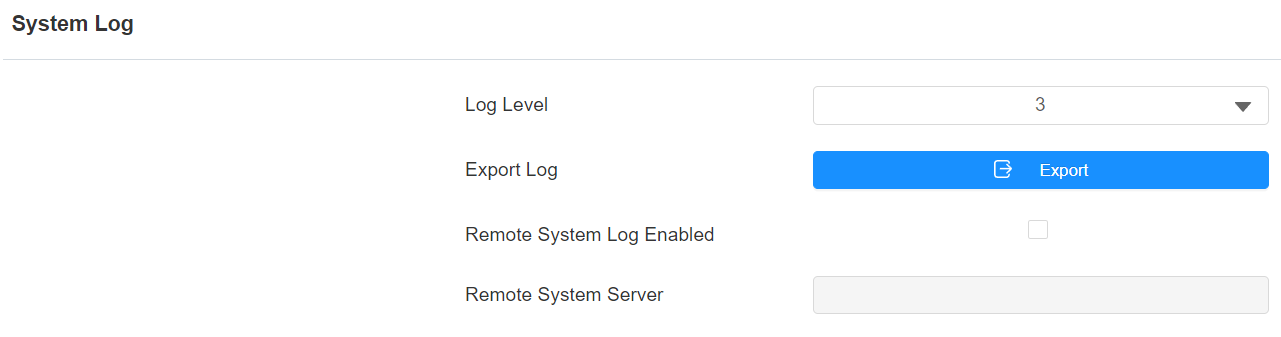
Log Level: Log levels range from 1 to 7. You will be instructed by Akuvox technical staff about the specific log level to be entered for debugging purposes. The default log level is 3. The higher the level is, the more complete the log is.
Export Log: Click the Export tab to export the temporary debug log file to a local PC.
Remote System Server: Set the remote server address to receive the device log. The remote server address will be provided by Akuvox technical support.
Remote Debug Server
When the device is having a problem, you can use the remote debug server to access the device log remotely for debugging purposes.
To set it up, go to System > Maintenance> Remote Debug Server interface.
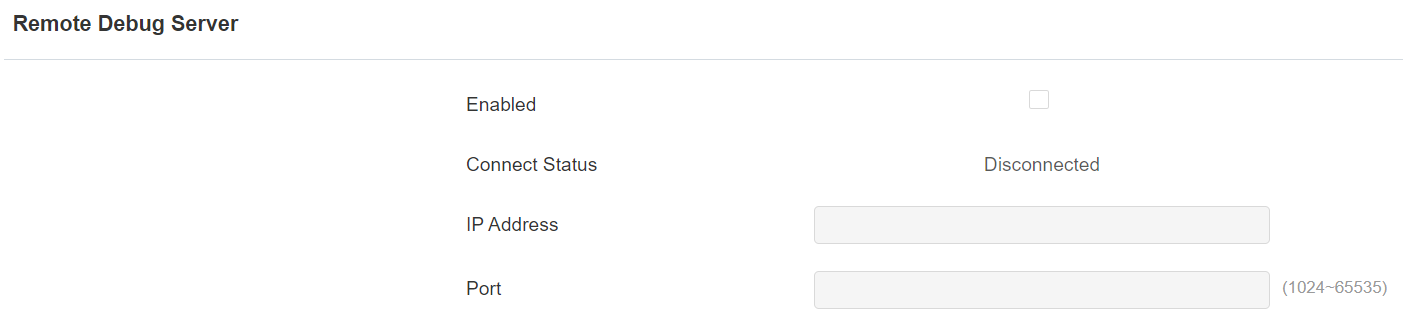
Connect Status: Display the remote debug server connection status.
IP Address: Set the remote debug server IP address. Please ask the Akuvox technical team for the server IP address.
Port: Set the remote debug server port.
PCAP for Debugging
PCAP is used to capture the data package going in and out of the devices for debugging and troubleshooting purposes.
To set it up, go to System > Maintenance > PCAP interface.
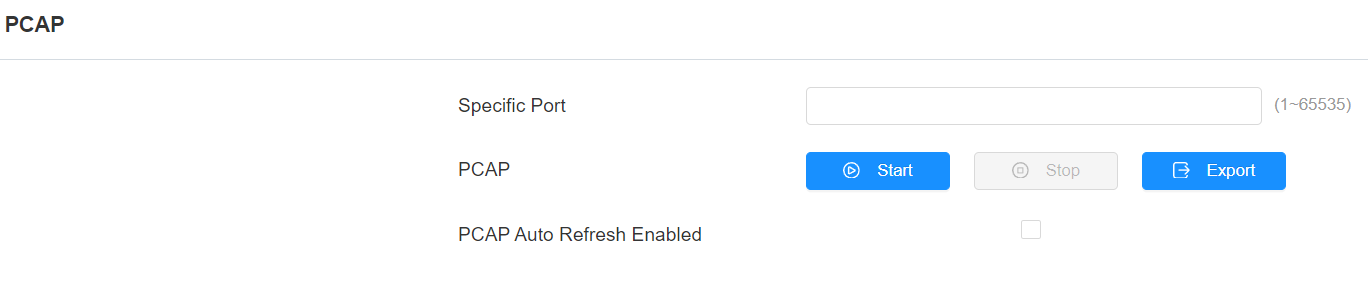
Specific Port: Select the specific ports from 1-65535 so that only the data packet from the specific port can be captured. You can leave the field blank by default.
PCAP: Click the Start tab and Stop tab to capture a certain range of data packets before clicking the Export tab to export the data packets to your Local PC.
PCAP Auto Refresh Enabled: When enabled, the PCAP will continue to capture data packets even after the data packets reach their 50M maximum in capacity. When disabled, the PCAP will stop data packet capturing when the data packets captured reach the maximum capturing capacity of 1MB.
Ping
The device allows you to verify the accessibility of the target server.
To set it up, go to the System > Maintenance > Ping interface.

Cloud Server: The server to be verified.
Verify the network address accessibility: The service type.