Door Logs
To search and review various types of door access history, simply check the door logs on the device's web interface.
Check door logs on the web Status > Access Log interface. The device can store 100,000 door logs.
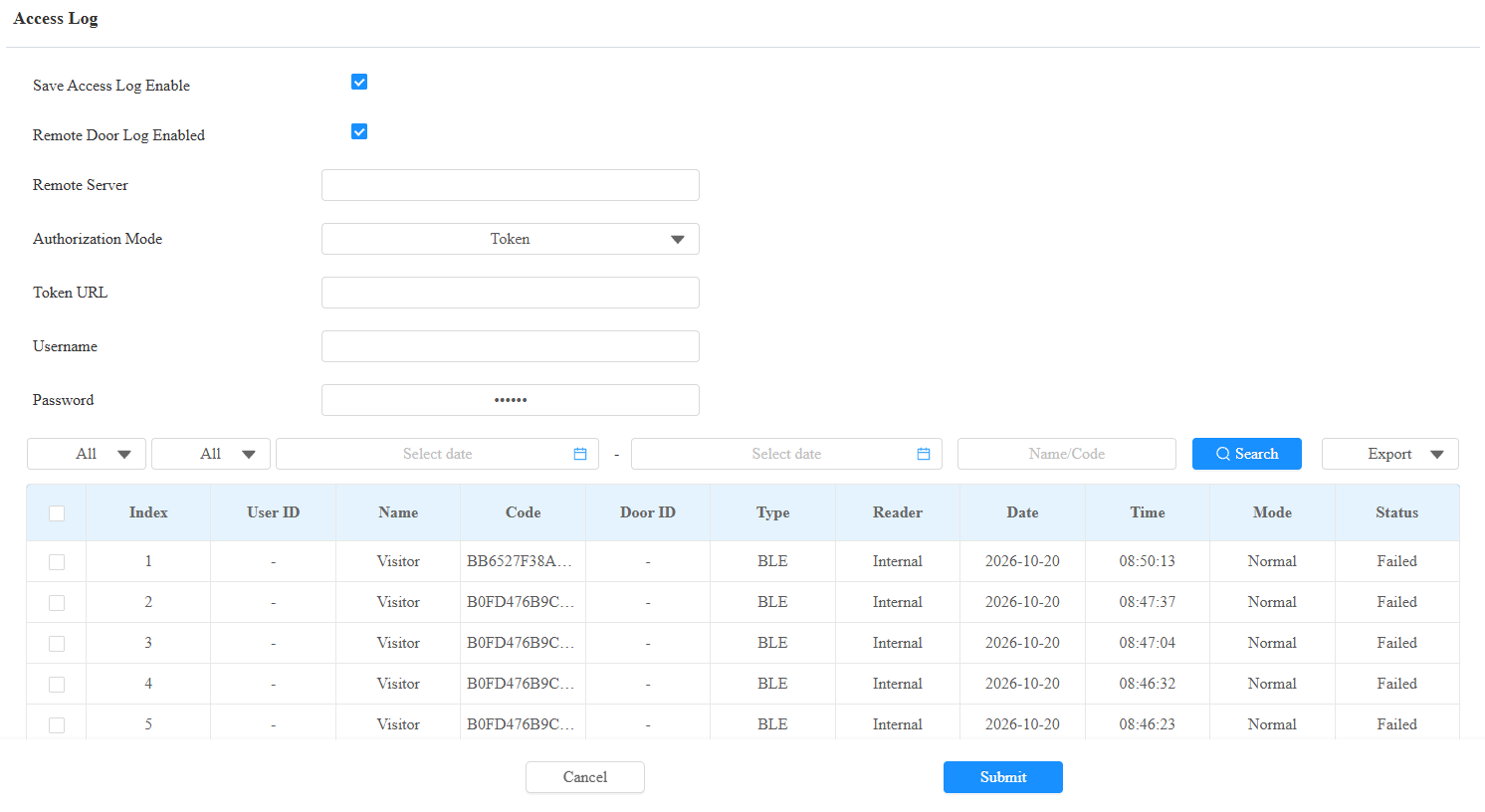
Save Access Log: Decide whether to save the door-opening records.
Remote Door Log Enabled: Disabled by default. When enabled, the device can send access records in real time to the designated remote server.
Remote Server: The URL or IP address of the server. URLs must begin with
http://,https://, orftp://. The following characters are not permitted:&,%,',=,!,$,?, Chinese characters, or consecutive special characters such as--or@@.Authorization Mode: Specify the authentication method used when connecting to the remote server.
None: No authentication. The connection is unencrypted. Username and Password fields are hidden.
Basic(default): HTTP Basic authentication. Username and Password fields are displayed and required.
Digest: HTTP Digest authentication. Username and Password fields are displayed and required.
Token: HTTP Token authentication. Token URL, Username, and Password fields are displayed and required.
Status: Success and Failed options represent successful door accesses and failed door accesses, respectively.
Time: Select the specific period of the door logs you want to search, check, or export.
Name/Code: Search the log by the username or the PIN code.
Door ID: Display the door name.
Type: Display the access type, such as QR code.
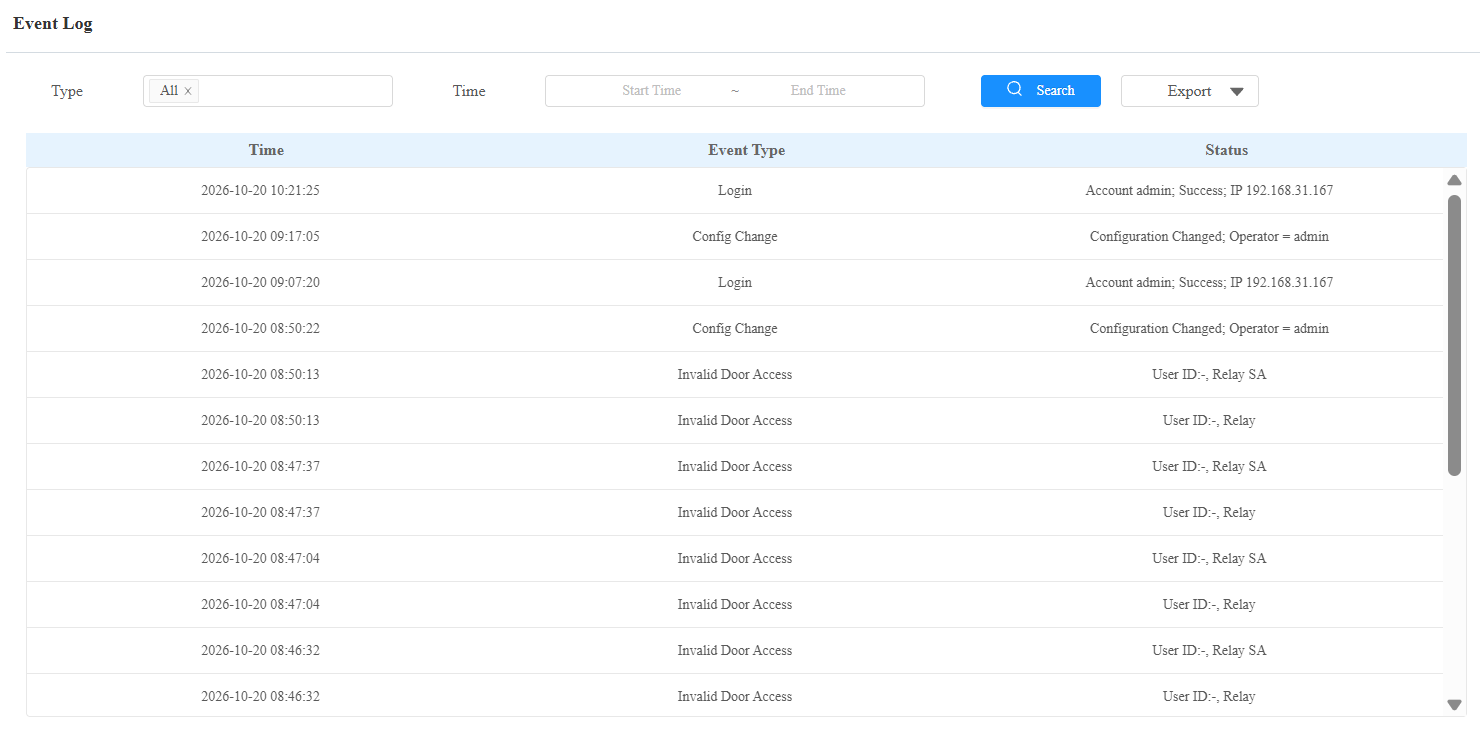
Event Logs
The event logs record the key events such as the status change of input, relay, tamper alarm, etc. This helps track the status and changes of the device.
You can check the event logs on the Status > Event Log interface. The device supports up to 100,000 logs, which can be exported in CSV format.