The local contact information is used to initiate SIP or IP calls to users. You can group the contact information to facilitate group calls to target users. Moreover, the contact list functions as a whitelist, allowing only listed numbers to open doors via DTMF during calls.
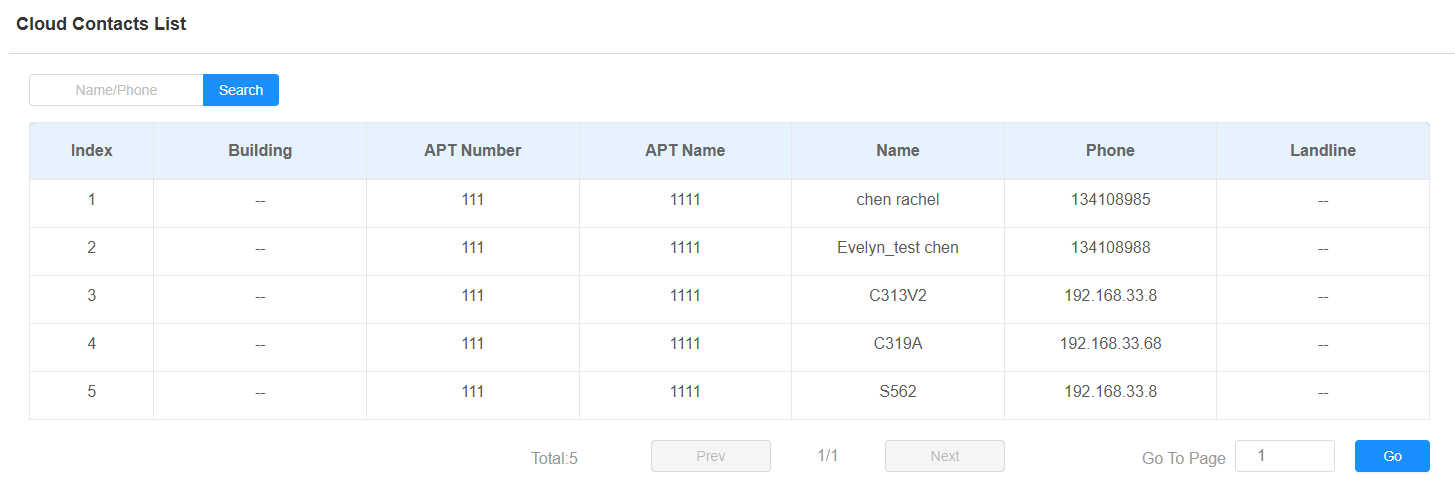
When the device is deployed on the SmartPlus Cloud, cloud contacts will display on the device web but not editable.
Manage Contact Groups
You can create and edit a contact group for the contacts. The contact group will be used when you are adding a user.
Set it up on the web Directory > User > Group interface. Click +Add to add a group. The device supports adding up to 1,000 groups.

Set up Contact Details
Add the contact information of users on the web Directory > User interface. The device supports up to 10,000 users. Click +Add to add a user.
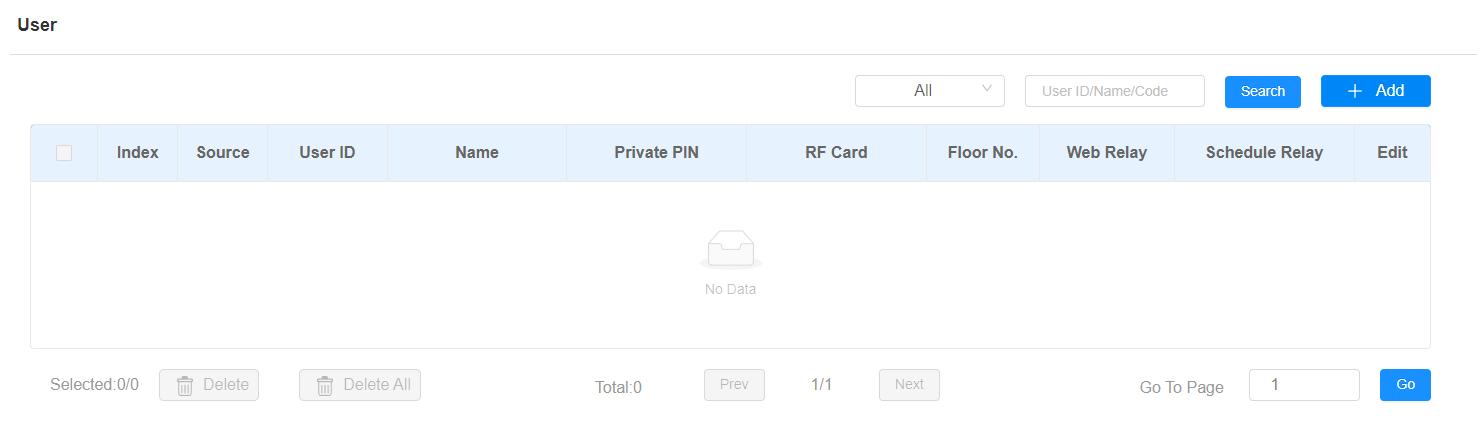
Set the user ID and name.

Find the Contact Details part.
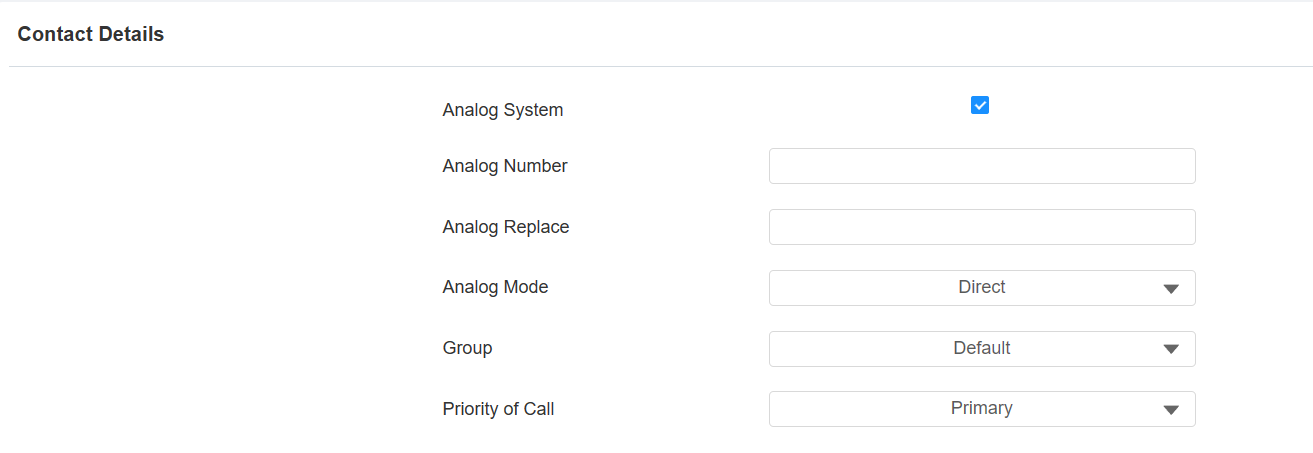
Analog System: When enabled, configure the analog number, and users can call the analog handset.
Analog Number: The number of the analog switch.
Analog Replace: Optional configuration. The short number replaces the analog number. Users can call the analog handset by entering the short number on the door phone's keypad.
Analog Mode: Direct means the analog switch is connected to the door phone through wires. Proxy means the analog switch is not connected to the door phone through wires and when this option is selected, the analog proxy address needs to be filled in.
Analog Proxy Address: Available when Proxy mode is selected. The IP address of the door phone in Direct mode.
Group: Put the contact in a desired contact group.
Priority of Call: Set the priority of the call among three options: Primary, Secondary, and Tertiary. For example, if you set the priority of call for one of the contacts in a specific contact group as Primary, then the contact will be the first to be called among all the contacts when someone presses on the contact group to make a group call.
Dial Account: The account to make the call.
Tip
To see detailed steps of configuring analog feature, please refer to:
Without filling in the contact number, the contact will not display on the Directory screen.
Contact List Display
You can customize the contact list display to cater to users' operational and visual preferences.
Set it up on the Directory > Directory Setting interface.
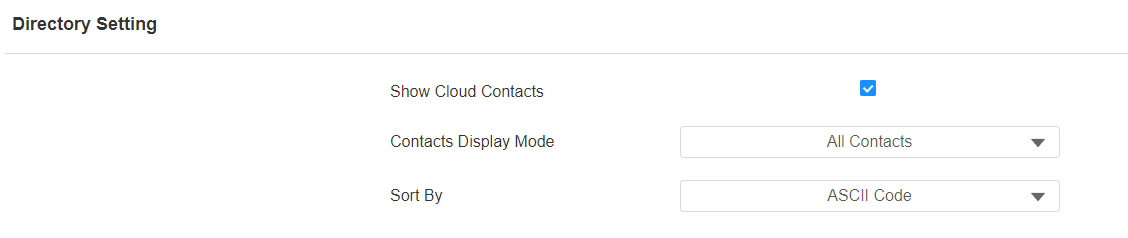
Show Cloud Contacts: The contacts synchronized from the SmartPlus Cloud can be displayed.
Contacts Display Mode:
All Contacts: Display all the contacts.
Groups Only: Display contact groups. Press the desired group on the device screen to make a group call.
Contact Display by Group: Display contacts by groups. Press the group, and users can see the contacts in it.
Do Not Display Contacts: Neither contacts nor groups will display.
Sort By:
ASCII Code lists the tenants by their names in the sequence of the ASCII code.
Room No. lists the tenants according to their room numbers.
Import lists the tenants according to their order in the imported file.
Cloud Call Permission Control: This option will display when the device is connected to the SmartPlus Cloud. It decides whether to link the SmartPlus user’s permissions to open doors and make calls.
For example, when users are not authorized to open doors during a specific time and the Cloud Call Permission Control feature is enabled, their SmartPlus App and/or indoor monitors will not receive calls from the door phone.
If this feature is disabled, even if users cannot open doors, they can receive the calls.
Cloud Contact List
When the device is connected to the SmartPlus Cloud, the cloud contacts will be displayed on the Directory > Directory Settings > Cloud Contacts List.